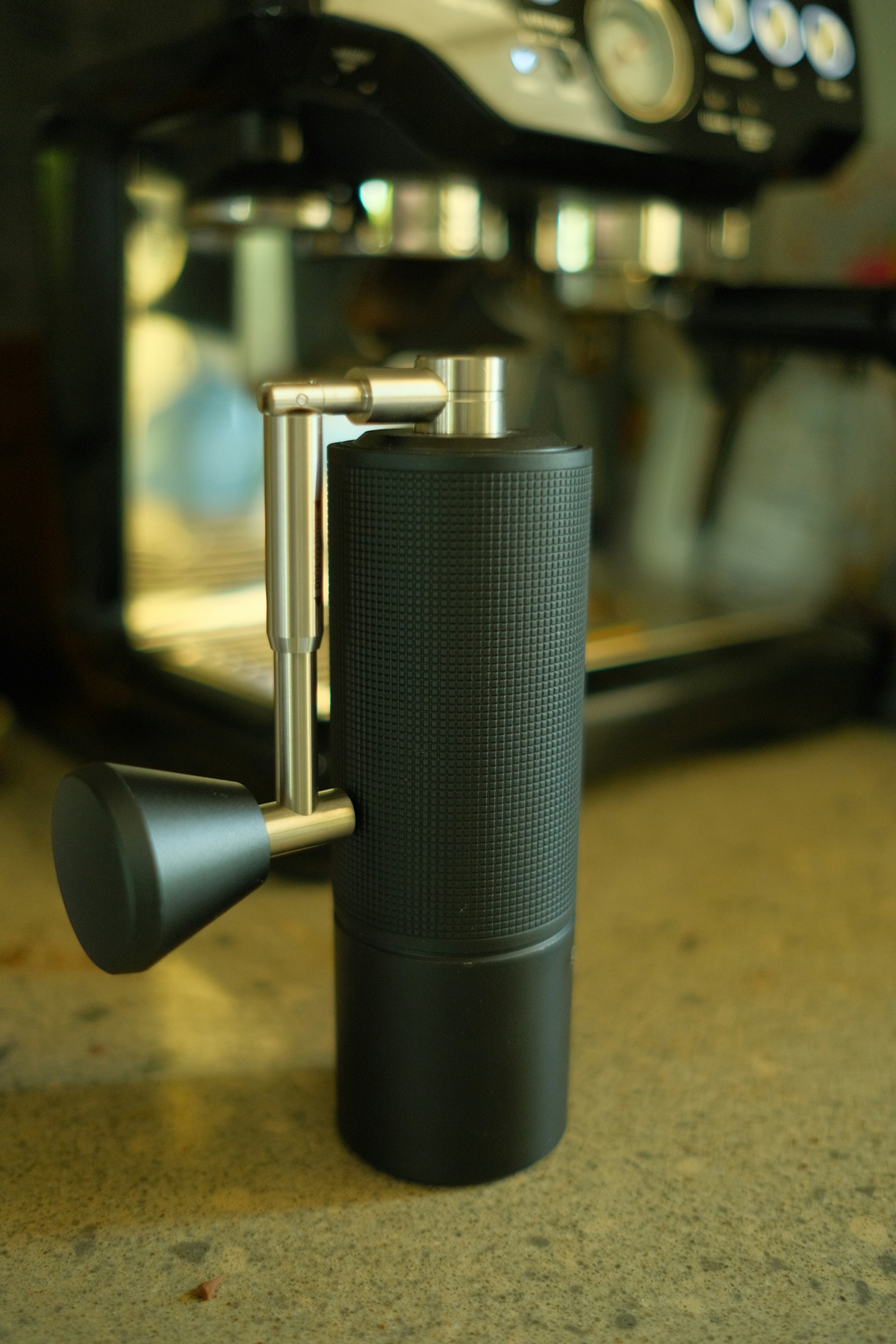
Is your espresso pouring in a few watery seconds, or barely making it through the basket? Grind size is one of the first things to change. Espresso normally needs a fine grind, somewhere closer to fine sand than table salt, but there is no numbered setting that works on every grinder. Keep the coffee dose and target drink weight the same, then move the grinder by one small step. Go finer when the shot runs too quickly and coarser when the machine chokes or drips. Do not copy a number from somebody else's grinder and expect the same result. Those numbers are useful reference points on one machine, not a shared scale across every brand or even every individual grinder.
01
Keep the recipe steady first
A common starting recipe is one part dry coffee to about two parts espresso by weight, such as 18 grams in and 36 grams out. It is a starting point, not a law. Begin timing when your machine or preferred method says to, then taste the result. Numbers make changes repeatable; flavour tells you whether they helped.
Use a scale that fits the drip tray and reacts quickly. Our espresso scale guide compares suitable models. Keep the basket, dose and target yield fixed while changing grind, otherwise you will not know which variable changed the flow.
02
Use the flow to guide the next change
Water meets more resistance as particles become finer and pack more tightly. If the target yield arrives far too quickly and the shot tastes thin or sharply sour, move slightly finer. If the machine barely drips, the shot takes too long or the cup tastes harsh and dry, move slightly coarser. Taste can overlap, so do not diagnose from time alone.
Make small changes because espresso responds strongly to tiny adjustments. Purge a little retained coffee after moving the dial, especially on grinders with a long chute. A grinder built for close adjustment is easier to control; compare our coffee grinders for espresso and broader coffee grinder picks.
03
Make the coffee bed consistent
Uneven distribution creates easy paths through the coffee, called channeling. The shot may run quickly in one area and slowly in another, giving a mixed taste that grind changes cannot fix. Fill a dry basket, distribute evenly and tamp level with a repeatable motion. The exact tamp force matters less than a flat, stable bed once the coffee is compressed.
Use the basket dose range from its maker. Overfilling can press the puck into the shower screen and restrict flow; underfilling leaves excessive headspace and can make preparation less stable. Clean the basket holes and group area regularly. An inconsistent machine or dirty grinder makes dialling in look harder than it is.
04
Expect the setting to move over time
Fresh coffee releases gas and often needs a different setting as it ages. Roast level, bean density, humidity and temperature also affect flow. That is why copying another person’s grinder number rarely works. Record the coffee, dose, yield, time and setting, then make one small correction when the next shot moves away from the target.
Pressurised baskets are more forgiving and may use a somewhat coarser grind, while standard single-wall baskets expose preparation errors more clearly. Our home espresso machine guide helps match equipment to the desired learning curve. For other brewers, use the broader coffee grind size chart. Dial in again when you open a different bag rather than protecting an old setting.
Let the machine and portafilter reach their normal temperature, use fresh water and dry the basket between shots. If a change makes the cup worse, return one step instead of chasing it with several new variables. Keep wasted test shots small by stopping when the flow is clearly wrong. A simple notebook quickly reveals whether the grinder drifts, the beans are ageing or puck preparation is the inconsistent part.
Sources and further reading
We use primary and specialist sources to check the principles in this article. Product recommendations are researched separately.


