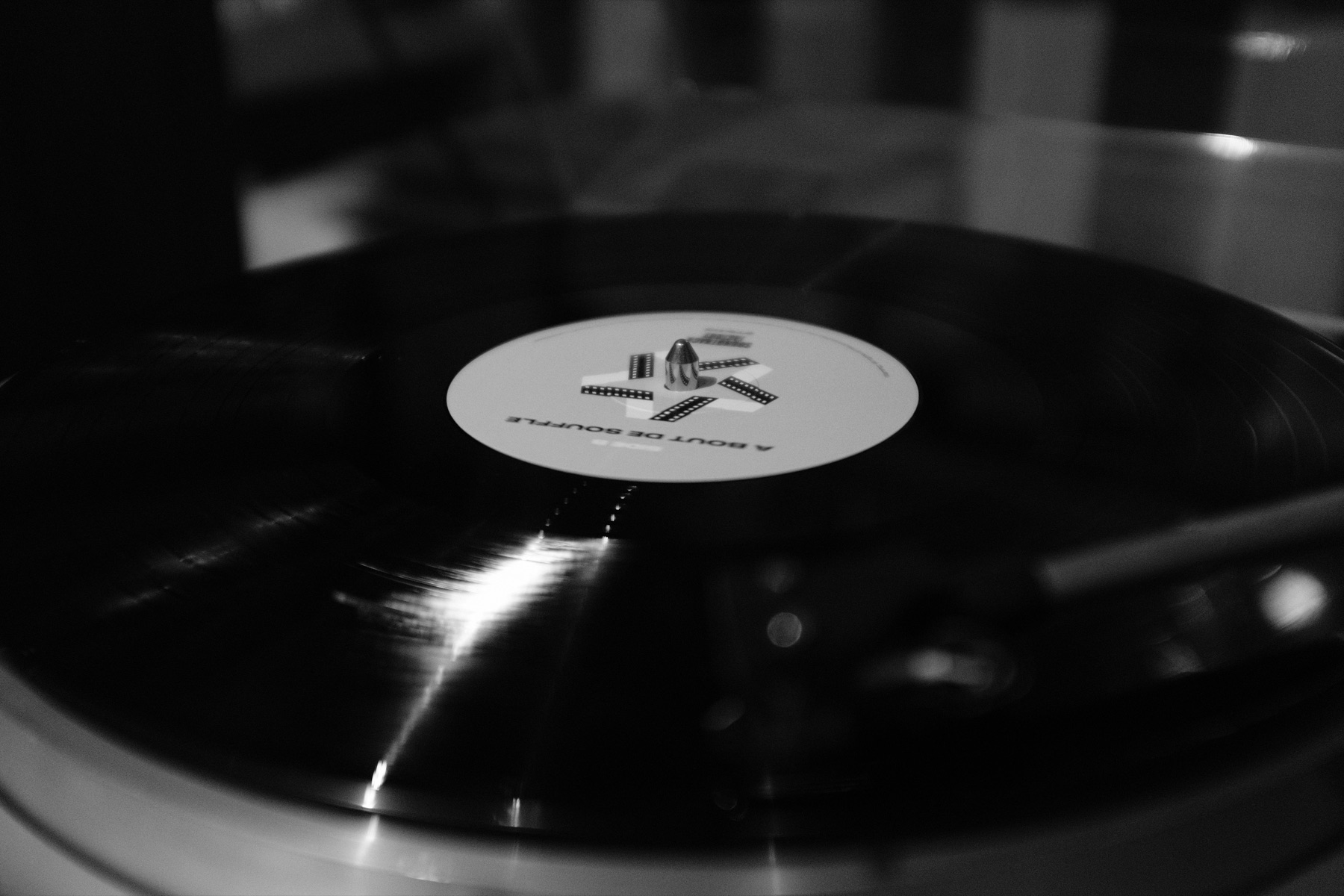
Ever looked at a record groove and wondered how it can hold a whole song? As the record spins, the stylus follows tiny changes in that groove. The cartridge turns those movements into a very small electrical signal. A phono preamp prepares the signal, then an amplifier and speakers turn it into the music you hear. That basic path explains most parts of a turntable, from the platter and motor to the tonearm and cartridge. It also explains many first-time setup problems. The wrong speed changes the pitch, a PHONO or LINE mismatch changes the volume, and a badly set tonearm can struggle to follow the groove. Once each stage matches the next, the machine feels far less mysterious.
01
The music is stored in the groove
A record groove is a continuous spiral containing small side-to-side and vertical variations that represent the two stereo channels. As the record turns, the stylus traces those shapes. It does not read digital data or a hidden code. Dust, scratches and wear physically disturb that journey, which is why clean records and a sound stylus matter.
Most albums play at 33⅓ rpm and many singles at 45 rpm, though other formats exist. Select the speed printed on the record. Our turntable guide compares complete players, while beginner turntables reduce some setup work.
02
The platter must spin at a steady speed
The motor rotates the platter. In a belt-drive design, an elastic belt links the motor to the platter or sub-platter and can help isolate vibration. In a direct-drive design, the motor turns the platter directly, giving quick start-up and strong speed control. Either can sound good when well designed; drive type alone does not decide quality.
A mat supports the record and may help with grip or vibration. The plinth holds the parts in alignment, while feet isolate the deck from furniture. Place the turntable on a level, stable surface away from speakers. Feedback can occur when speaker vibration reaches the stylus and is amplified again.
03
The tonearm helps the stylus follow the record
The tonearm holds the cartridge and moves across the record while allowing tiny vertical and horizontal motion. Adjustable models need the correct tracking force, set with the counterweight and cartridge specification. Too little force can mistrack; too much can increase wear. Anti-skate applies a small opposing force to help balance the arm’s inward pull.
Automatic turntables may place and return the arm for you. Manual models leave those steps to the listener. Use the cue lever rather than dropping the stylus by hand. Replace the stylus at the maker’s interval or when wear and damage appear, and fit only a compatible replacement.
04
The tiny signal needs a phono preamp
Inside the cartridge, stylus movement shifts a magnet or coil and creates a tiny signal. A phono preamp boosts it and applies the RIAA equalisation used for records. A turntable set to PHONO needs a phono input or external preamp. One set to LINE has a built-in preamp active and connects to a normal line input.
Do not run a LINE output into a PHONO input because the result can be heavily distorted. If your deck includes a switch, match it to the destination. Our turntables with built-in preamps simplify connection, and turntable and speaker packages help when starting from nothing. Setup ends with care. Hold records by the edge and label, return them to clean inner sleeves and keep the dust cover shut when the player is idle.
Use only a record brush and stylus cleaner approved for the materials. If the platter speed wanders, the belt may be worn or incorrectly fitted, though power and motor faults are also possible. Do not oil or adjust the mechanism without instructions. A correctly assembled basic turntable is safer for records than an expensive one with the wrong force, damaged stylus or unstable surface.
Sources and further reading
We use primary and specialist sources to check the principles in this article. Product recommendations are researched separately.


