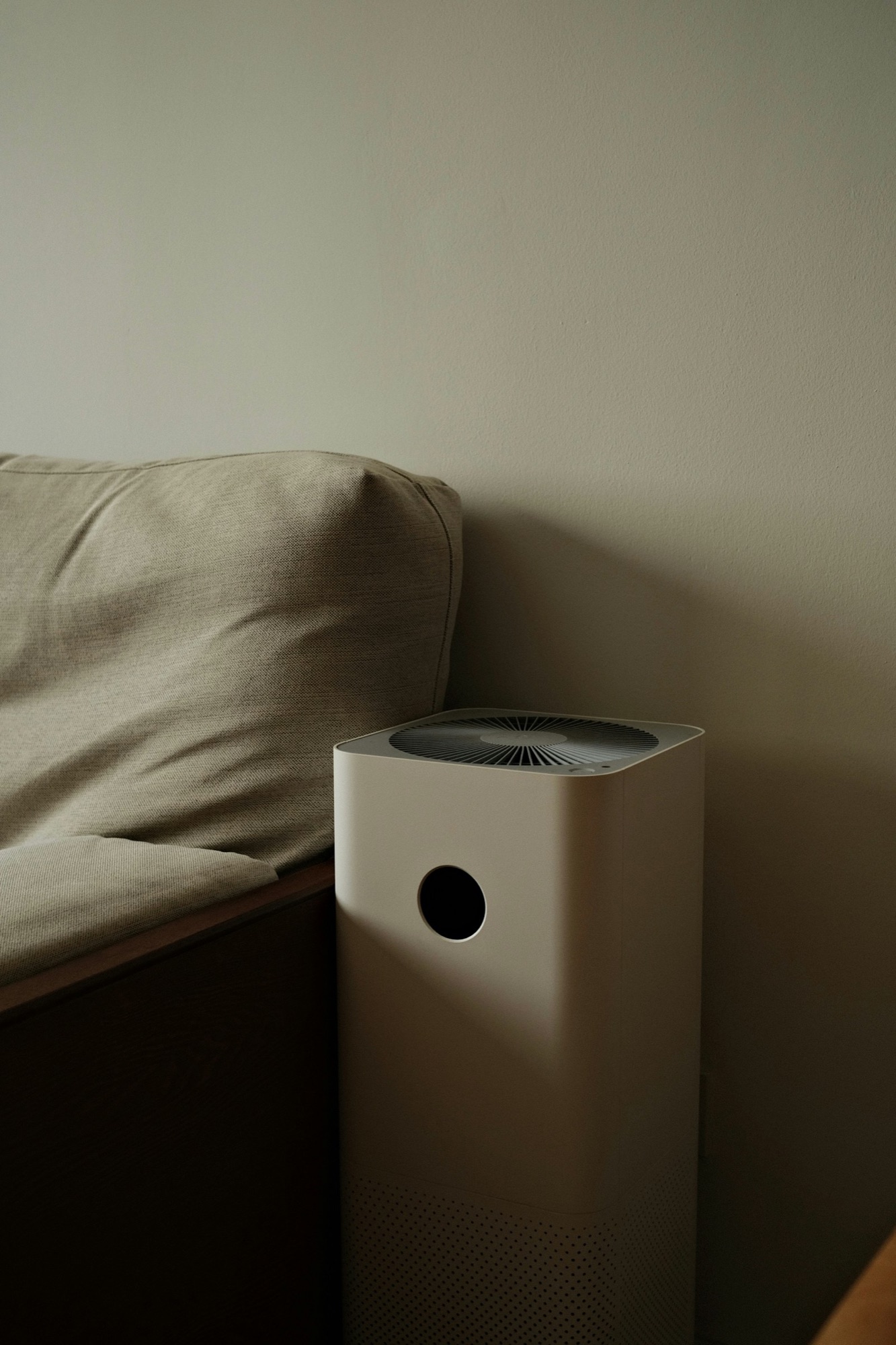
Looking for an air purifier because pollen is ruining your mornings? Perhaps smoke gets indoors, or the bedroom always feels dusty. Start with the problem that bothers you most. Then find a purifier that can clean the room without making so much noise that you turn it off. Room size matters far more than a glossy app. If you want to jump straight to the options, see our guide to the best air purifiers.
01
Start with what you want to remove
Do not start with the brand. Start with what you want to remove. Pollen and smoke are particles. Pet dander and most household dust are too. They need a good particle filter. HEPA is useful, but it is not magic. The purifier still needs a fan that can move enough air.
Smells and gases are different. They need activated carbon, and the skinny carbon sheet fitted to many inexpensive purifiers will not absorb odours for long. For homes with animals, we also look for an easy-to-clean pre-filter and an intake that does not become a fur trap. Our guide to air purifiers for pets goes deeper on that combination.
02
Match CADR to the real room
CADR looks technical, but the idea is simple: it tells you how much cleaned air the machine can deliver. A higher number generally means faster cleaning. The catch is that brands quote different units and wildly different room-size claims, sometimes based on only one air change per hour. Compare like with like rather than trusting the largest square-foot number on the box.
Measure the room and include ceiling height if it is unusual. Then give yourself some headroom. A purifier that can only handle your bedroom on its loudest setting is unlikely to be welcome at 2 a.m.; a slightly larger model running at medium speed is often the more comfortable choice. Open-plan rooms need more capacity because the air does not respect the imaginary line between kitchen and living area.
03
Check filter cost and noise
The price on the shelf is only the first bill. Before buying, check what a genuine replacement filter costs, how often it is likely to need changing and whether it is readily available. We have seen plenty of cheap purifiers become expensive once two years of filters sold only by the brand are included. A washable pre-filter helps with hair and coarse dust, but it does not replace the main filter.
Noise figures deserve the same scepticism as room-size claims. What matters is the sound at the speed you will actually use, plus whether the display can go dark at night. If cost is the main constraint, compare the best air purifiers under $100. For a larger room, the stronger models in our under-$200 air purifier guide may make more sense than running a smaller unit flat out.
04
Treat extra features as extras
Automatic mode can be genuinely handy when a decent particle sensor is involved. Apps, schedules and voice controls can be nice too. Just remember that none of them adds airflow or carbon. We would always take quieter performance, sensible filters and easy-to-find replacements before another smart-home badge.
Be wary of ozone-producing devices and sweeping health promises. A properly sized purifier can reduce unwanted particles in the air; it cannot fix damp, remove established mould or guarantee that symptoms disappear. If mould is the concern, deal with the moisture first, then read our guide to air purifiers for mould to understand where filtration can still help.
Once it arrives, do not hide it behind a sofa because it looks tidier. Leave the intake and outlet clear, close the room door when practical and clean the pre-filter as instructed. That unglamorous setup work often makes a bigger difference than any feature in the app.
Sources and further reading
We use primary and specialist sources to check the principles in this article. Product recommendations are researched separately.


