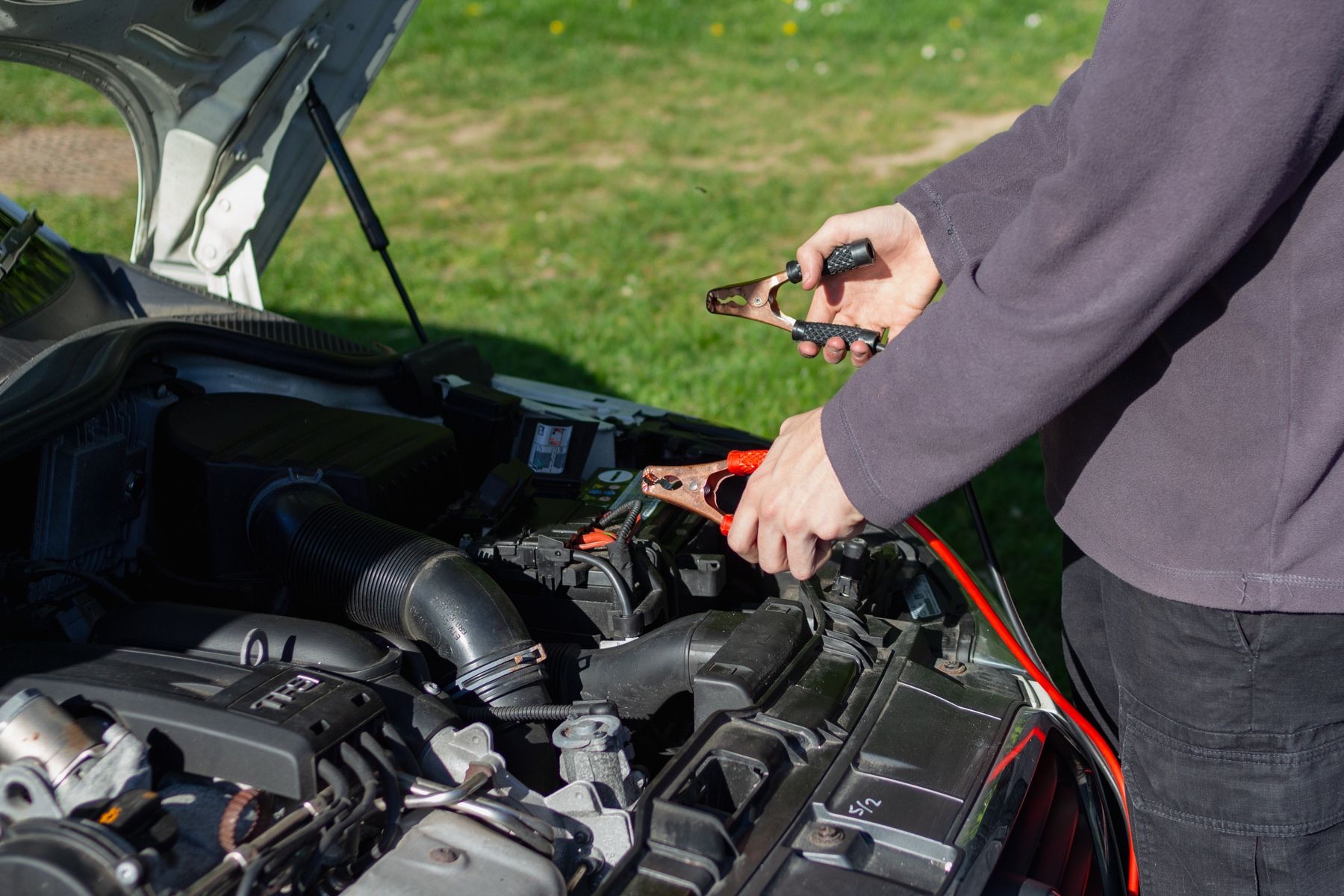
Got a flat car battery and a charger in the garage, but not quite sure which clamp goes where? Slow down before connecting anything. Check the battery type and voltage, look for cracks, swelling or leaks, and keep the charger unplugged while you attach the leads. Work somewhere dry and well ventilated, away from flames or sparks. The clamp order can differ between chargers and vehicles, so the diagrams in both manuals come before any general guide. Good light and enough cable length help more than people expect. If you are rushing, cannot identify the terminals or see damage around the battery, it is better to stop and get help than to guess.
01
Check the battery before connecting anything
Park securely, switch off the ignition and every accessory, remove the key and open the bonnet. Read the battery label for nominal voltage and chemistry. Match those details to an approved charger mode. A lead-acid setting is not automatically safe for lithium, and an AGM battery may require its own profile. Remove jewellery and wear the protective equipment stated in the manuals.
Look for cracks, bulging, leaking fluid, corrosion, loose terminals or signs of freezing. Stop if the battery is damaged or you cannot identify it. A technician can test the battery and vehicle charging system. If you still need equipment, compare smart car battery chargers rather than choosing on current alone.
02
Attach the clamps with the power off
Place the charger as far from the battery as its leads allow and keep it stable. The unit should remain unplugged. Many negative-ground vehicles call for the positive clamp on the positive battery post, then the negative clamp to a specified chassis or engine ground away from the battery. Other vehicles and batteries removed from a car can require a different sequence.
Follow the exact diagrams in both manuals. Never let clamps touch each other, bridge terminals with a tool or lean over the battery while connecting. Keep leads clear of fans, belts, sharp metal and hot parts. Clean corrosion only by an approved safe method before charging; poor contact can create heat and false charger readings.
03
Stay close when charging begins
Select voltage, chemistry and charge mode before plugging the charger into mains power. Confirm that its display recognises the battery correctly. Stay nearby at the start and watch for error lights, arcing, swelling, hissing, strong odour or unusual heat. Disconnect safely if the instructions tell you to stop. Never smoke or create a flame near a charging battery.
Charging time is set by usable charger output, battery capacity and how empty or healthy the battery is. Do not raise voltage or use repair mode simply to hurry it. A charger-maintainer suits storage, while a charger with jump start serves a different emergency job.
04
Unplug before removing the clamps
When the charger shows completion, switch it off if required and unplug it from mains power before touching clamps. Remove connections in the sequence stated by the manufacturer, commonly the reverse of installation. Keep the clamps separated, refit any battery covers and make sure no tool remains in the engine bay before closing the bonnet.
If the vehicle still will not start, do not repeat charge cycles blindly. The battery may be worn out, the terminals may have a poor connection or the starter and alternator may need attention. A portable car battery charger can be useful, but correct diagnosis prevents a charging problem from becoming an electrical or safety problem. Store the charger dry with its leads loosely coiled and clamps protected from accidental contact.
Inspect the cable insulation before the next use. If charging is part of seasonal storage, check the vehicle manual for alarms, keyless systems and other loads that continue drawing power. Record the battery age and resting behaviour so a failing unit is noticed before the next trip. Repeatedly reviving a battery that goes flat after normal driving hides the fault rather than fixing it.
Sources and further reading
We use primary and specialist sources to check the principles in this article. Product recommendations are researched separately.


