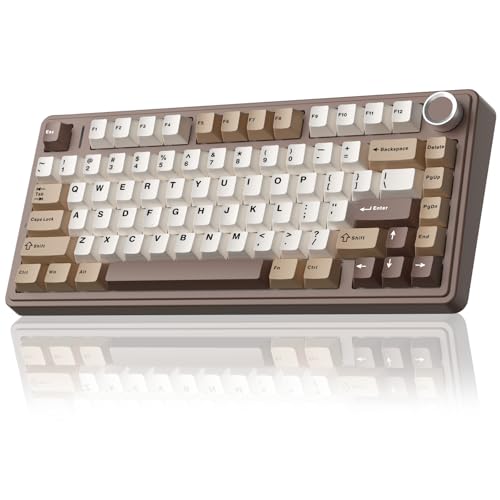
Need a mechanical keyboard that will not annoy everyone in the room? Silent linear switches are usually the quietest place to start. They avoid the click mechanism used by louder switches and add small dampers to soften both the press and the return. Silent tactile switches keep a gentle bump and can come close, although they often make a little more noise. The switch is only half the story. A hollow case, rattling spacebar or hard desk can make a board with silent switches surprisingly loud. For a shared office, listen to the complete keyboard from normal sitting distance. A desk mat and a lighter typing touch can sometimes make as much difference as choosing another switch.
01
Silent linear switches are the quietest starting point
A normal linear switch moves smoothly without a tactile bump or click jacket. A silent version adds soft damping where the stem hits the bottom and top of its travel. This reduces the sharp clack on both key press and release. Cherry MX Silent Red is a familiar example, but many brands offer similar designs with different weights and materials.
The trade-off is feel. Damping can make the bottom-out softer or slightly less crisp, which some typists describe as mushy. Heavier springs may also reduce accidental presses but tire light typists. Our mechanical keyboards with linear switches show how the switch fits into a complete board.
02
Silent tactile switches keep some feedback
Tactile switches create a bump during the press without a deliberate click sound. Silent tactile designs combine that bump with stem damping. They can suit people who want confirmation before the key bottoms out, helping some typists press less forcefully. The bump itself and leaf can still produce more sound than a very smooth silent linear switch.
Try a small switch tester before buying a full set because tactile shapes vary from a gentle early bump to a firm rounded event. Compare complete tactile mechanical keyboards. Avoid clicky blue-style switches in a shared quiet room; their click mechanism is designed to be heard.
03
The case and spacebar matter too
A hollow case can amplify each impact. A rigid metal plate often sounds sharper than a softer plate, while internal foam and well-designed mounts can reduce resonance. Thick keycaps change pitch rather than simply lowering volume. Large keys also depend on stabilisers, which may rattle or tick even when the letter keys are quiet.
A desk mat reduces sound reflected by a hard desktop and stops the case from knocking against it. Lubricating compatible switches and stabilisers can reduce scratch and rattle, but incorrect lubricant or disassembly can damage parts and affect warranties. Buying a well-tuned quiet mechanical keyboard is easier than modifying a noisy one.
04
Judge the whole keyboard in the real room
Online recordings are poor volume comparisons unless the microphone, distance, room and typing force are controlled. They are useful for hearing pitch and character, not proving which switch is quietest. Look for measured tests when available and compare boards under the same method. A low-pitched sound may feel less intrusive even when a meter reading is similar.
For an office, prioritise silent switches, stable large keys, a solid case and a layout that does not slow your work. Our mechanical keyboard guide covers broader choices, while mechanical keyboards for typing focus on daily feel. Whatever the switch, learning not to strike the bottom hard makes an immediate difference. Hot-swappable sockets make switch experiments easier, but check whether the board accepts three-pin or five-pin housings and which orientation its LEDs use.
Changing switches will not fix loose stabilisers or a resonant case. For a shared office, let a colleague listen from normal desk distance rather than judging with your ear beside the keys. The quietest useful setup is one that stays comfortable, since a switch that causes fatigue is a poor trade even if it wins a sound test.
Sources and further reading
We use primary and specialist sources to check the principles in this article. Product recommendations are researched separately.