# 28. True Wireless Earbuds: What Does “True Wireless” Mean?
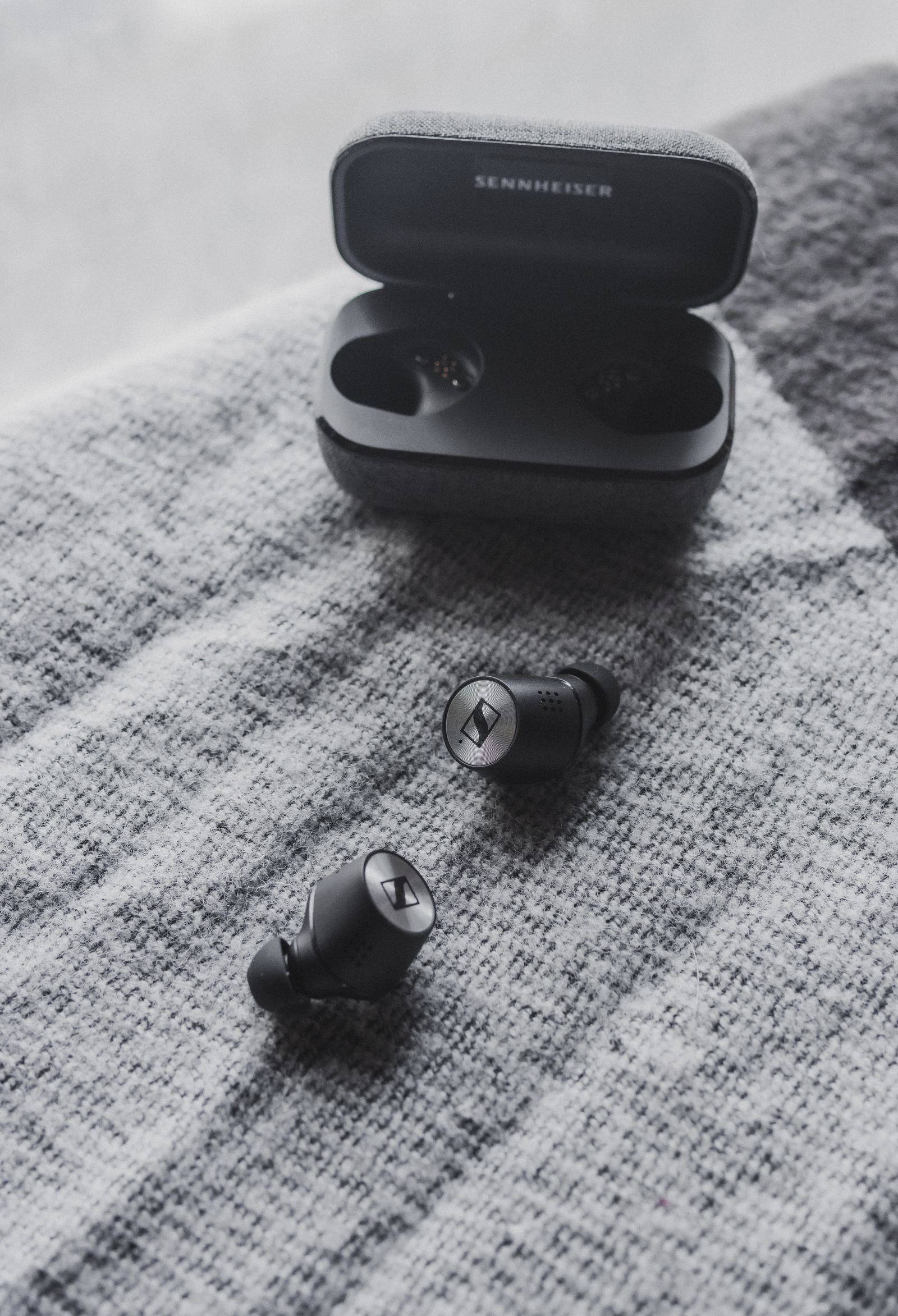
True wireless earbuds are headphones where the left and right earpieces have no physical cable connecting them.
Each earbud operates wirelessly and is usually stored inside a charging case.
They have become one of the most common types of personal headphones because they are compact, portable and convenient.
01
What makes earbuds “true wireless”?
Traditional wireless earphones can still have a cable connecting the two earpieces.
That cable may sit behind your neck even though the headphones connect to your phone using Bluetooth.
True wireless earbuds remove that cable completely.
Both earpieces communicate wirelessly.
02
How do true wireless earbuds connect?
Most use Bluetooth.
You pair the earbuds with your phone, laptop, tablet or another compatible device.
Once paired, they normally reconnect automatically whenever you remove them from the charging case.
Modern models may also support multipoint connections, allowing the earbuds to stay connected to two devices.
03
Why do they come with a charging case?
The earbuds themselves are too small for very large batteries.
The case contains its own battery and recharges the earbuds whenever they are stored inside.
This means a pair might provide several hours of listening per charge while the case extends total usage across multiple recharges.
04
What are the advantages?
True wireless earbuds offer:
- no connecting cable
- compact size
- easy storage
- portable charging
- touch controls
- optional noise cancellation
- microphones for calls
They are especially convenient for commuting, travel and workouts.
05
What are the disadvantages?
The small size creates some trade-offs.
Individual earbuds are easy to lose.
Battery capacity is also limited compared with larger headphones.
Microphone quality can vary, particularly in noisy environments.
Battery degradation eventually reduces listening time, and batteries inside tiny earbuds are rarely easy to replace.
06
True wireless vs wireless headphones
Over-ear wireless headphones usually offer larger drivers, longer battery life and stronger passive isolation.
True wireless earbuds are much smaller and easier to carry.
The best choice depends on where you use them.
For commuting or exercise, earbuds can be more convenient.
For long listening sessions at home, larger headphones may be more comfortable.
07
Do true wireless earbuds have noise cancellation?
Some do.
Premium models frequently include active noise cancellation, but it is not required for earbuds to qualify as true wireless.
Budget models may rely only on passive isolation.
08
What should you look for?
Important features include:
- fit
- battery life
- charging case size
- microphone quality
- water resistance
- ANC
- transparency mode
- multipoint Bluetooth
If you are comparing current options, see our best wireless earbuds.
09
Practical checks before you continue
The charging case is part of the system, not just storage. It tops up each earpiece, protects the contacts and often controls pairing or reset functions. Compare the earbuds’ single-charge runtime separately from the larger total that includes several case recharges, especially for long calls or travel.
Bluetooth range and stability depend on the phone, radio environment, codec and how the earbuds coordinate. A newer Bluetooth version does not by itself guarantee better sound. Check multipoint support if you switch between a laptop and phone, and confirm which features work on each operating system.
Fit affects comfort, bass and isolation. Sealed silicone tips can block more noise, while open designs admit more surroundings but may feel less secure. Our true wireless earbud guide compares these trade-offs, while open-ear alternatives prioritize awareness.
Small batteries lose capacity over time and may not be user-replaceable, so warranty and repair policies matter. Keep charging contacts dry, wipe off moisture before returning earbuds to the case and avoid extreme heat. If buying for daily use, compare our broader wireless earbud recommendations alongside the exact IP rating and control layout.
Call quality depends on microphone placement, wind processing and the connected device. Record a short voice note in a quiet room and outdoors during the return period rather than relying only on how music sounds.
For commuting, verify that each earbud can work alone and that the case fits the pocket or bag you actually use. Lost-earbud location features may help only while the battery has power and the model remains connected to its supported app.
Sources and further reading
We use primary and specialist sources to check the principles in this article. Product recommendations are researched separately.