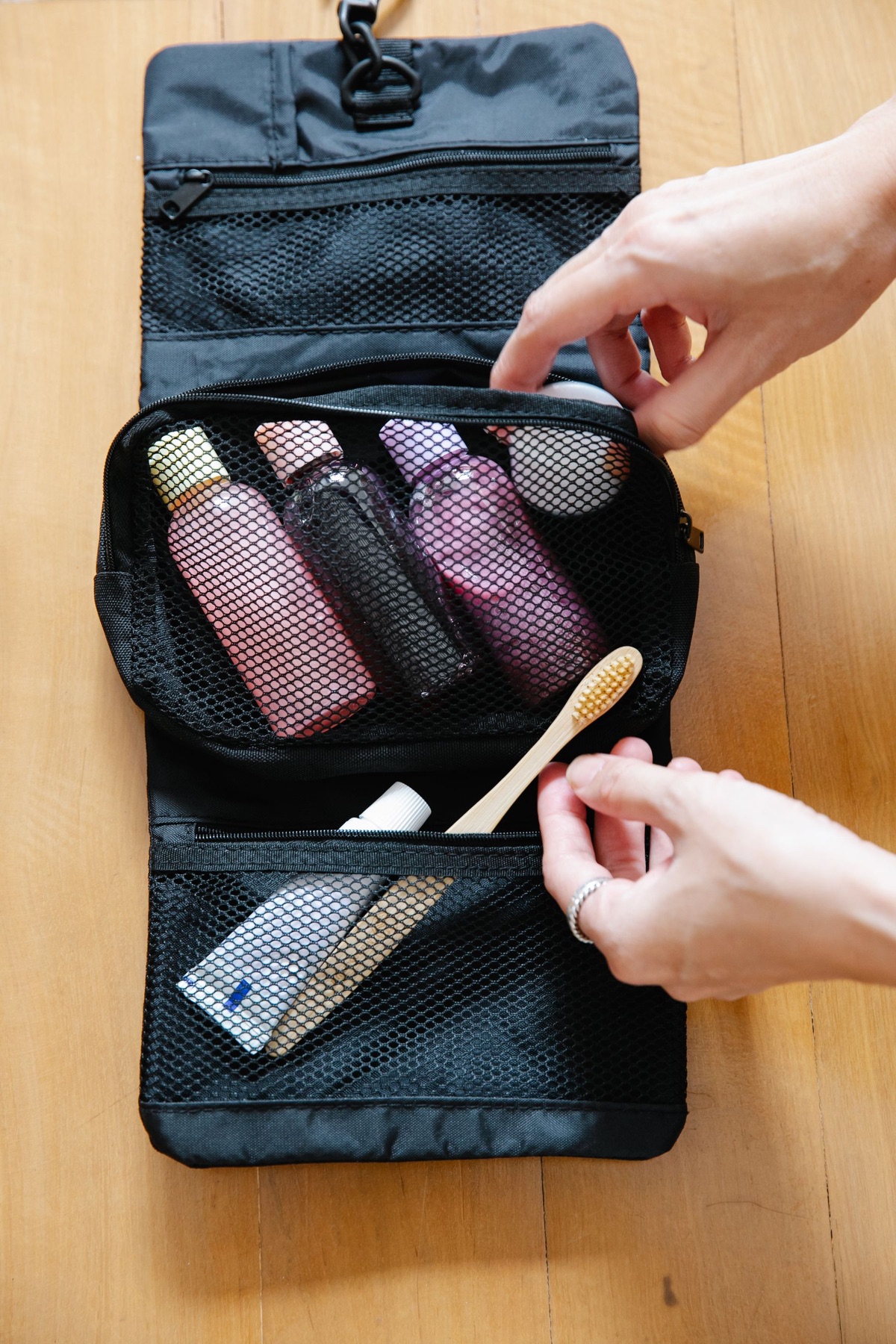
Looking for a TSA-approved toiletry bag and seeing the phrase on almost every product page? Here is the useful part: TSA does not certify individual toiletry bags. For standard US carry-on screening, you need one clear, quart-sized bag that closes properly. Each liquid, gel, cream or paste inside it must be in a container of 3.4 ounces or 100 millilitres or less. A simple zip-top bag can work just as well as a travel pouch with a large TSA badge on the label. What matters is the real size of the bag and what you put inside it. Medicine and baby supplies can follow different rules, while airports outside the US may use a different process.
01
The 3-1-1 rule is simpler than it sounds
Each liquid container must hold no more than 3.4 ounces or 100 millilitres. A half-full 200 millilitre bottle is still too large because the container capacity is what matters. All standard carry-on liquids go into one quart-sized bag per passenger. Toothpaste, liquid makeup, gel deodorant and many spreadable products count, not only drinks.
The bag should be transparent enough for officers to see its contents and should close without being stretched open. A simple zip-top food bag can meet the rule. A stronger reusable pouch may be easier to pack and less likely to leak. Our carry-on toiletry bag guide focuses on that practical difference.
02
Do not trust the label alone
TSA does not normally test and approve individual toiletry-bag models for passengers. A seller may call a pouch TSA approved because its stated size and clear design are intended to match the rule. That does not guarantee acceptance if it is overfilled, larger than a quart or holding containers above the limit. The security officer makes the final decision.
Check dimensions rather than trusting a badge on the listing. Some roomy clear wash bags are useful in checked luggage but too large for the standard liquids allowance. If you want separate storage for dry grooming items, compare our broader toiletry bag picks and keep the liquids pouch easy to reach.
03
Make the bag easy to remove
Decant only into clean, leak-resistant travel bottles and label anything that is not obvious. Do not fill bottles to the brim because pressure and temperature changes can encourage leaks. Close caps, wipe the outside and place messy items in a small secondary sleeve only if the complete liquids bag still closes comfortably.
Pack the clear bag near the top of your case rather than under shoes. Our carry-on luggage size guide explains why airline baggage limits are separate from security rules. For a suitable case, compare carry-on luggage and remember that wheels and handles count towards airline measurements.
04
Check special items before you travel
Medically necessary liquids can exceed the standard limit, but declare them to the officer and expect additional screening. Breast milk, infant formula and related cooling items also follow special provisions. Check the current TSA page before departure because the details matter. Never discard needed medicine merely to fit a standard toiletry pouch.
Rules and screening technology differ outside the United States, and an airport may temporarily use a different process. Check the departure airport and each connection, not only the airline. Checked baggage also has safety limits for some aerosols and toiletry articles. When in doubt, use the strict 100 millilitre format and keep essential medicine in original, clearly identified packaging. Powders, solid cosmetics and empty bottles do not normally use the liquids allowance, but individual items can still receive extra screening.
A safety razor, scissors or aerosol may have a separate rule even when it fits inside the pouch. Treat the bag as organisation, not permission for everything it holds. Review unusual products in TSA’s current “What Can I Bring?” search and check the airline for hazardous-material limits before deciding whether an item belongs in carry-on or checked baggage.
Sources and further reading
We use primary and specialist sources to check the principles in this article. Product recommendations are researched separately.


