The 5 Best Hiking Backpacks for Women
A hiking pack should feel right with weight in it, not only in a product photo. I would start with torso length, hipbelt contact and where the water and layers will go; the 'women's' label is useful only if that harness actually fits your body. A ventilated suspended back, a close-to-body frame and a running-vest harness solve different days on the trail.
Osprey Tempest 20 is the balanced day-hike choice. Sirrus 24 moves the load away from the back for ventilation; Deuter Futura 25 SL favors a shorter torso and more structured carry. Tempest Velocity is for moving quickly, while Teton Oasis is a lower-cost hydration pack without the same fit options. I would try these with a real day-hike load before deciding from liters alone.
Our top 5 hiking backpacks for women
Swipe to compare price, rating and best use →
| Product | Price | Rating | Best for |
|---|---|---|---|
01 Osprey Tempest 20Details ↓ Osprey Tempest 20Details ↓ | $159.95 | 4.5/5Amazon | Best balanced women-specific daypack |
02 Osprey Sirrus 24Details ↓ Osprey Sirrus 24Details ↓ | $199.95 | 4.6/5Amazon | Best ventilated day hike |
03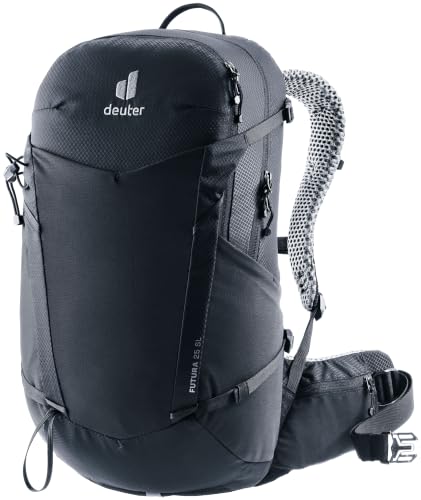 Deuter Futura 25 SLDetails ↓ Deuter Futura 25 SLDetails ↓ | $170.00 | 4.4/5Amazon | Best shorter-torso structured carry |
04 Osprey Tempest Velocity 20Details ↓ Osprey Tempest Velocity 20Details ↓ | $195.00 | 4.8/5Amazon | Best hiking-and-running crossover |
05 TETON Sports Teton Oasis 18LDetails ↓ TETON Sports Teton Oasis 18LDetails ↓ | $52.74 | 4.5/5Amazon | Best inexpensive hydration start |
01 — Osprey
Best balanced women-specific daypackOsprey Tempest 20
Tempest 20 is the pack I would try first for a regular day hike with water, a shell and lunch. Its close-to-back AirScape-style carry and hipbelt favor movement over the suspended airflow of Sirrus. The 20-liter size is enough only if the rest of your kit is compact; put a real load inside to check that the hipbelt sits on your hips rather than your waist.
It leads because its capacity and trail-oriented harness suit the broadest active day-hike brief. I would choose Sirrus if a cooler back matters more than close carry, or the Velocity if running is genuinely part of the day. Tempest is still a poor fit if its torso range misses you.
Specifications: Osprey Tempest series information ↗
View on Amazon ↗Regular day hikers wanting close, stable carry.
You prioritize an open-mesh back gap.
What I like
+Trail-focused 20-liter size and hipbelt.
What to weigh
−Fit and capacity must be tried loaded.
02 — Osprey
Best ventilated day hikeOsprey Sirrus 24
Sirrus 24 serves someone who dislikes a pack lying directly against the back on warm climbs. Osprey's AirSpeed suspension holds the load away for airflow, while 24 liters leave more room for a layer and food than Tempest 20. That suspended shape can feel less close and takes more physical space in a car or tight luggage; test the back length and hipbelt loaded.
Second place is a comfort preference, not a promise that ventilation eliminates sweat. I would pay for Sirrus when the mesh gap and four extra liters are useful. For scrambling or faster movement, the closer Tempest is the steadier comparison.
Specifications: Osprey Sirrus 24 details ↗
View on Amazon ↗Warm-weather walkers who value back ventilation.
You want the closest possible load for fast movement.
What I like
+AirSpeed back and 24-liter space.
What to weigh
−Larger profile and less close carry.
03 — Deuter
Best shorter-torso structured carryDeuter Futura 25 SL
Deuter's Futura 25 SL is for a walker who has struggled with packs that hang too low or press awkwardly at the shoulders. Deuter describes a shorter SL back length, adjustable hip fins and an Aircomfort suspended-mesh system. Its 25 liters are useful for extra layers, but the more structured frame brings weight and does not replace trying the exact size.
Third place recognizes a specific fit solution at a similar premium price. I would choose it over Sirrus when Deuter's torso and hipbelt geometry feels better with your actual kit. A lightweight short walk does not require this much frame or storage.
Specifications: Deuter Futura 25 SL official details ↗
View on Amazon ↗Hikers needing a shorter structured harness.
A very light, close-running pack is the goal.
What I like
+SL fit and ventilated supported back.
What to weigh
−More structure and weight than simple packs.
04 — Osprey
Best hiking-and-running crossoverOsprey Tempest Velocity 20
Tempest Velocity 20 is different from the ordinary Tempest: Osprey gives it a running-vest-inspired harness, soft-flask-compatible front pockets and a cinch closure for quick access while moving. That design makes sense on a brisk hike or trail run where you want water without stopping. It is less convenient than a broad-opening daypack for carefully arranging camera gear or bulky layers.
Fourth place is about a narrower pace. I would choose it when fast movement is part of the actual route, not because it shares the Tempest name. For relaxed walks and a heavier lunch load, ordinary Tempest or Sirrus makes more sense.
Specifications: Osprey Tempest Velocity 20 features ↗
View on Amazon ↗Fast hikers carrying water up front.
You want broad access to bulky gear.
What I like
+Vest-like harness and front flask access.
What to weigh
−Specialized closure and carrying pattern.
05 — TETON Sports
Best inexpensive hydration startTeton Oasis 18L
Teton Oasis is the budget option if your main need is carrying water and a few light essentials, not a precisely fitted technical harness. Its listed 18-liter volume can work for a short warm-day route, but check the bladder size, cleaning access and hipbelt fit on this exact bundle. A hydration pack can feel full quickly once a rain layer and food are added.
It closes the list because it does not offer the same women-specific torso and support choices as the Osprey and Deuter packs. I would still buy it for shorter, lower-load walks when its current price matters more than long-day carrying refinement.
Specifications: Exact Amazon product listing ↗
View on Amazon ↗Short hikes with a small hydration load.
You carry heavy layers or need precise torso fit.
What I like
+Lower price with hydration-focused layout.
What to weigh
−Less support and usable packing room.
Price information
Amazon price and availability checked Oct 17, 2026, 10:23 PM Lisbon time. Prices and availability are subject to change; the information shown on Amazon.com at purchase applies.
Our process
How we picked.
We compare five relevant products for different needs, using documented specifications, clear use cases and practical trade-offs. Our goal is to make the differences clear and help you choose with confidence.
- 01Relevance
Each product must fit the guide’s intended use, audience and requirements.
- 02Specifications
We compare the key product details that meaningfully affect the buying decision.
- 03Use case and fit
We compare the intended use, configuration and practical fit of every selected product.
- 04Strengths and limitations
We explain where each option performs best and the compromises to consider.
Good questions
FAQ — Hiking Backpacks for Women
01Is a women-specific pack automatically the best fit?+
No. Measure torso and hips and load the pack. Harness shapes differ; a pack that presses or slips after an hour is the wrong fit regardless of its label.
02How many liters do I need for a day hike?+
About 20–25 liters covers many ordinary day trips, but layers, water, weather and group equipment change the requirement. Pack your actual kit before choosing.
The short answer
Start with the Osprey Tempest 20.
I recommend it for regular day hikers wanting close, stable carry. Choose something else if you prioritize an open-mesh back gap.
View on Amazon ↗Keep looking
Related guides
The 5 Best Luggage and Suitcases
Five luggage choices from Amazon Basics, Coolife, Samsonite and LEVEL8 for checked trips, sets and laptop carry-ons.

The 5 Best Suitcases
Five suitcases for different trip lengths, including Amazon Basics 21" Hardside and Carry-On Luggage Set, compared by case size, wheel handling, shell material, interior layout.

The 5 Best Suitcase Sets
Five luggage sets for cabin weekends, checked trips, families, companion bags and frequent travel.