The 5 Best Mirrorless Cameras for Beginners
Your first camera is a lens purchase as much as a body purchase. A cheap body-only listing leaves you unable to take a picture; a two-lens kit can cost more than you need to learn exposure. I would begin with the photographs you want to make, then compare the finder, screen and actual lens in the box. Those choices will matter long after the excitement of a new specification fades.
Canon's R100 kit is the sensible photo-first entry here. Sony's a6400 has a stronger growth path if you can afford the lens you want; Panasonic's G100 packs smaller for mixed travel. Nikon's Z30 makes self-video easier, while the two-lens OM System bundle asks for a much larger first commitment. I would buy that last package only if both focal ranges are already on your list.
Our top 5 mirrorless cameras for beginners
Swipe to compare price, rating and best use →
| Product | Price | Rating | Best for |
|---|---|---|---|
01 Canon EOS R100 KitDetails ↓ Canon EOS R100 KitDetails ↓ | $549.00 | 4.6/5Amazon | Best affordable photo-first kit |
02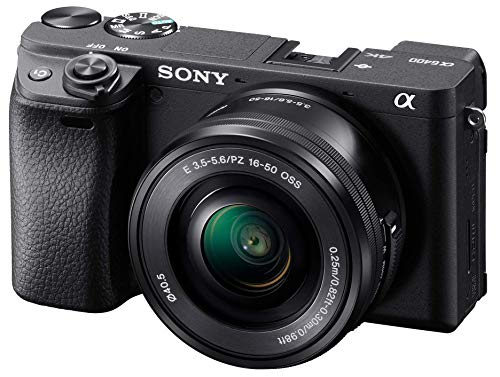 Sony a6400Details ↓ Sony a6400Details ↓ | $811.48 | 4.6/5Amazon | Best system to grow into |
03 Panasonic Lumix G100Details ↓ Panasonic Lumix G100Details ↓ | $597.99 | 5.0/5Amazon | Best small travel hybrid |
04 Nikon Z30 KitDetails ↓ Nikon Z30 KitDetails ↓ | $796.95 | 4.4/5Amazon | Best first camera for self-video |
05 OM System E-M10 IV KitDetails ↓ OM System E-M10 IV KitDetails ↓ | $1,150.39 | 5.0/5Amazon | Best two-lens learning bundle |
01 — Canon
Best affordable photo-first kitCanon EOS R100 Kit
R100 is my starting point for someone moving from a phone to deliberate still photos. The offered RF-S 18–45mm lens makes it a complete first kit, and the eye-level viewfinder is useful when sunlight washes out a rear display. Its screen does not flip forward, so this is a poor way to begin a solo vlog even though it can record video.
It leads because the low total kit price makes the first purchase clear. I would pay more for Sony a6400 if a wider lens plan and more controls are already important. If you expect to film yourself weekly, Nikon Z30 solves that framing problem more directly.
Specifications: Canon EOS R100 kit details ↗
View on Amazon ↗New photographers who mostly shoot stills.
You film yourself regularly.
What I like
+Lens and viewfinder in a lower-cost kit.
What to weigh
−Fixed screen limits self-video.
02 — Sony
Best system to grow intoSony a6400
A6400 suits a learner who expects photography to become a longer hobby. Its eye-level finder, E-mount lens selection and subject tracking leave room to move beyond the first zoom. This exact Amazon listing may be body-only: check the included lens before comparing its price with Canon's complete R100 kit. Sony's upward-tilting display also gets awkward under a shoe-mounted microphone.
Second place reflects that higher complete-system cost, not a weaker stills camera. I would choose Sony for someone already budgeting for lenses. If the goal is a straightforward first kit for family photos, Canon leaves more money for a card, bag and practice.
Specifications: Sony a6400 camera overview ↗
View on Amazon ↗Learners planning several E-mount lenses.
The purchase must include a lens at low cost.
What I like
+Viewfinder and established lens system.
What to weigh
−Potential body-only cost and awkward mic placement.
03 — Panasonic
Best small travel hybridPanasonic Lumix G100
G100 is the camera I would pack for a trip where weight and an outward-facing screen matter alongside still photographs. The Micro Four Thirds mount can keep lenses compact, and Panasonic built the camera around spoken video as well as travel stills. Check which lens this Amazon package contains and how tightly its 4K mode frames your face before buying for handheld vlogs.
Third place recognizes its useful middle ground: more self-video convenience than R100 and a viewfinder that Z30 omits. The smaller sensor and 4K crop are real compromises for low light or wide arm's-length filming. Choose it when carry size is the deciding factor.
Specifications: Panasonic Lumix G100 introduction ↗
View on Amazon ↗Travellers mixing photos and occasional video.
Wide self-shot 4K is the main task.
What I like
+Compact lens system with selfie screen.
What to weigh
−Video framing and low-light trade-offs.
04 — Nikon
Best first camera for self-videoNikon Z30 Kit
Z30 is a better starting point than the R100 if the camera will face you more often than a landscape. Nikon lists a vari-angle touchscreen and 4K video, and this offer names a 16–50mm starter zoom. It lacks an eye-level viewfinder, which can become frustrating for still photos outdoors. Check the bundle contents and microphone plan before treating the listed body price as the entire setup.
I rank it fourth in a general beginner guide because its screen-first design serves a narrower buyer. For weekly talking videos I would move it ahead of the photo-first cameras. For learning still photography in bright places, I would buy a kit with a finder.
Specifications: Nikon Z30 specifications ↗
View on Amazon ↗Solo creators who also want interchangeable lenses.
A viewfinder is essential for your photos.
What I like
+Front-facing touchscreen and kit zoom.
What to weigh
−No eye-level finder.
05 — OM SYSTEM
Best two-lens learning bundleOM System E-M10 IV Kit
This E-M10 IV bundle includes a 14–42mm everyday zoom and a 40–150mm telephoto, so a beginner can learn how focal length changes a scene without immediately ordering another lens. The body has a viewfinder and five-axis in-body stabilization. The kit's substantially higher current price and two-lens bag burden make little sense if you only want casual family snapshots.
It closes the general ranking on price, not on photographic usefulness. I would choose it when travel, wildlife at modest distance and handheld stills justify both lenses from day one. Canon's single-lens kit is a more economical place to discover whether you enjoy carrying a camera at all.
Specifications: OM System E-M10 IV camera ↗
View on Amazon ↗Beginners who already want two focal ranges.
Your budget is for a minimal first kit.
What I like
+Two named zooms and in-body stabilization.
What to weigh
−High initial cost and more gear to carry.
Price information
Amazon price and availability checked Oct 17, 2026, 10:25 PM Lisbon time. Prices and availability are subject to change; the information shown on Amazon.com at purchase applies.
Our process
How we picked.
We compare five relevant products for different needs, using documented specifications, clear use cases and practical trade-offs. Our goal is to make the differences clear and help you choose with confidence.
- 01Relevance
Each product must fit the guide’s intended use, audience and requirements.
- 02Specifications
We compare the key product details that meaningfully affect the buying decision.
- 03Use case and fit
We compare the intended use, configuration and practical fit of every selected product.
- 04Strengths and limitations
We explain where each option performs best and the compromises to consider.
Good questions
FAQ — Mirrorless Cameras for Beginners
01Is a kit lens enough for a first camera?+
Yes for learning general framing and daylight exposure. Confirm the exact lens in the offer, then add a specialized lens only after you know what the kit lens cannot do.
02Which matters more, a viewfinder or a front-facing screen?+
A finder helps compose still photos in bright light; a front-facing screen helps solo video. Choose for the job you will do most often rather than assuming every beginner needs both.
The short answer
Start with the Canon EOS R100 Kit.
I recommend it for new photographers who mostly shoot stills. Choose something else if you film yourself regularly.
View on Amazon ↗Keep looking
Related guides
The 5 Best Budget Action Cameras
Five action cameras from AKASO, DJI and SJCAM for first rides, self-framing, water use and a video-quality upgrade.

The 5 Best Mirrorless Cameras for Photography
Five cameras for photography, chosen for clean detail, dependable colour and more confident image work for shoppers comparing mirrorless camera for photography.
The 5 Best Cheap Mirrorless Cameras
Five affordable mirrorless cameras, led by Sony Alpha a6400 Mirrorless and Canon EOS R100 Mirrorless, selected for kit contents, lens mount and total cost.