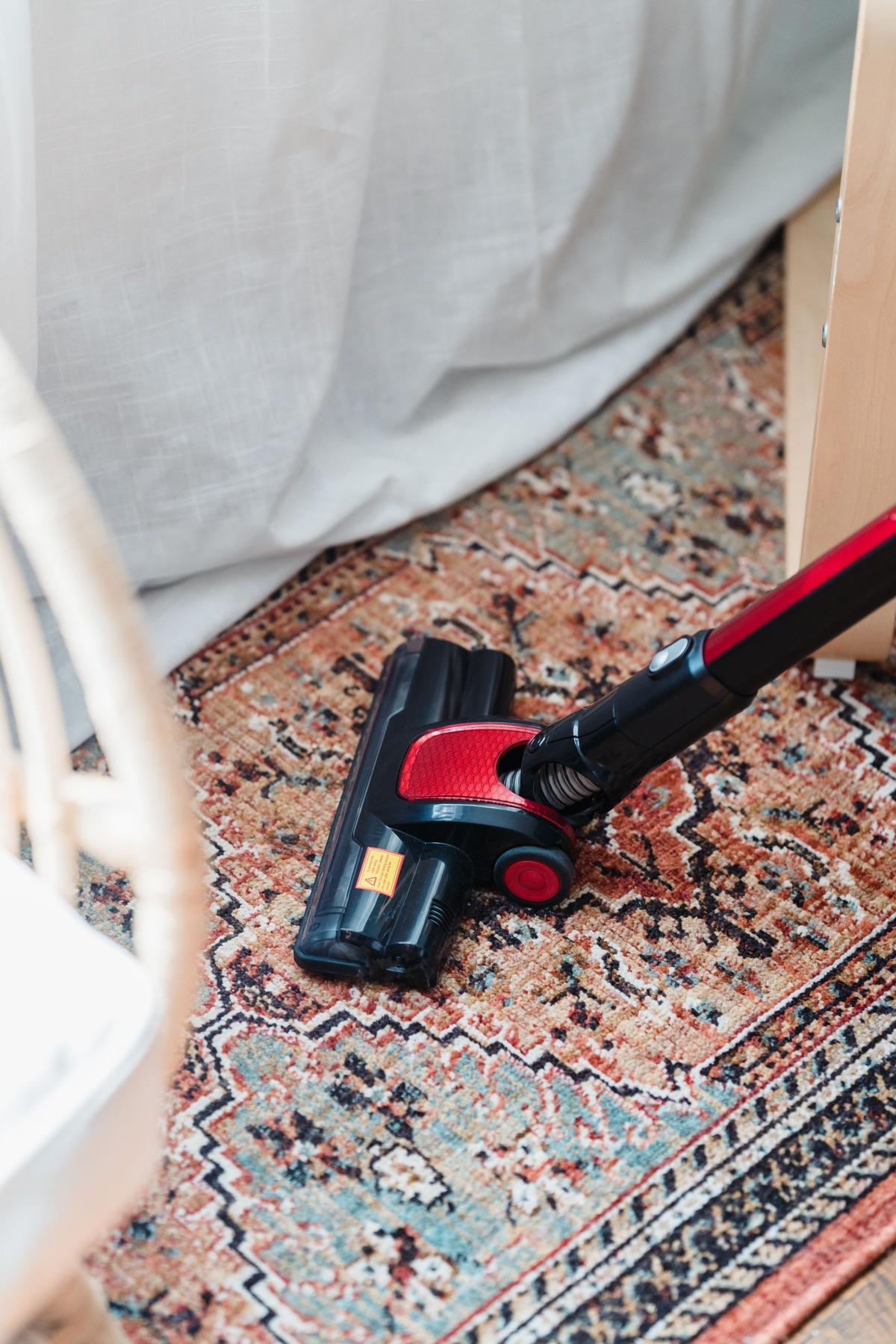
Thinking of adding baking soda to a carpet cleaner because the room smells a little stale? Keep the kitchen powder out of the solution tank unless the machine maker clearly says it is safe. It can clump, block the small water lines and leave a chalky residue behind. A shop-bought carpet formula that mentions baking soda is different because it has been made to dissolve inside an extraction machine. You can sometimes use dry baking soda directly on a carpet, but that is a separate job and you should check the carpet and vacuum instructions first. Be especially careful with rented equipment, since an improvised mixture can leave blocked jets for you and the next person to deal with.
01
Kitchen powder is not carpet-cleaner formula
Baking soda from the kitchen is a dry powder. Carpet-cleaner tanks, pumps and spray jets are designed around liquids with controlled foam and concentration. Even if powder appears to dissolve in a jug, residue may settle as the water cools or the mixture stands. That can reduce spray, leave pale marks or become difficult to flush from small passages.
Some manufacturers sell approved extraction formulas containing baking soda. Those products include other ingredients and are tested as complete formulas. Their existence does not make a homemade mixture equivalent. Use the quantity on the label and confirm that the formula suits your exact machine, whether owned or rented.
02
What about sprinkling it on the carpet?
People often sprinkle a light layer on dry carpet to address odour, leave it briefly and vacuum it up. Before doing that, test a hidden area and read the carpet and vacuum guidance. Fine powder can pass through weak filters, clog some machines or remain deep in thick pile. More powder does not mean better deodorising.
Vacuum slowly in more than one direction and check that no powder remains before wet extraction. A machine made for rugs may handle ordinary debris better; compare our vacuums for rugs and vacuums for carpets. Neither guide overrides a product warning about fine powder.
03
Keep homemade mixtures out of the tank
Never combine baking soda with bleach, ammonia, carpet shampoo, vinegar or another cleaner inside the tank unless the manufacturer provides that exact recipe. Mixing products can create excessive foam, pressure, residue or harmful reactions. The safest approach is one approved formula at its stated dilution, followed by the rinse and cleaning routine in the manual.
If you have already added an unapproved product, switch the machine off and unplug it. Do not keep running it to see whether the blockage clears. Empty and rinse only as the manual directs, then contact the manufacturer or rental company if spray, suction or smell is abnormal.
04
Start with the stain, not the machine
First identify the carpet fibre and stain. Blot liquids, remove solids and use a treatment approved for that material. Then test for colour change in a hidden spot. Wool, natural fibres, unstable dyes and glued backings need more caution than a colourfast synthetic fitted carpet. Our guide to cleaning an area rug with a carpet cleaner explains those limits.
Pre-vacuum with a suitable carpet-cleaning vacuum, fill the extractor with approved solution and avoid overwetting. Make slow dry passes until little water returns, then create airflow and keep people off the carpet while it dries. A clean machine tank matters, but fast, complete drying matters just as much. Separate odour control from stain removal. Baking soda may mask or absorb a mild surface smell, but it cannot remove contaminated underlay, ongoing damp or material left below the carpet.
Pet urine and flooding can travel beyond the visible mark and may need specialist treatment. If the source is unknown, adding fragrance or another powder only makes diagnosis harder. Deal with leaks first, and do not wet-clean an area that already smells musty until you know the carpet, backing and floor beneath can dry safely.
Sources and further reading
We use primary and specialist sources to check the principles in this article. Product recommendations are researched separately.


