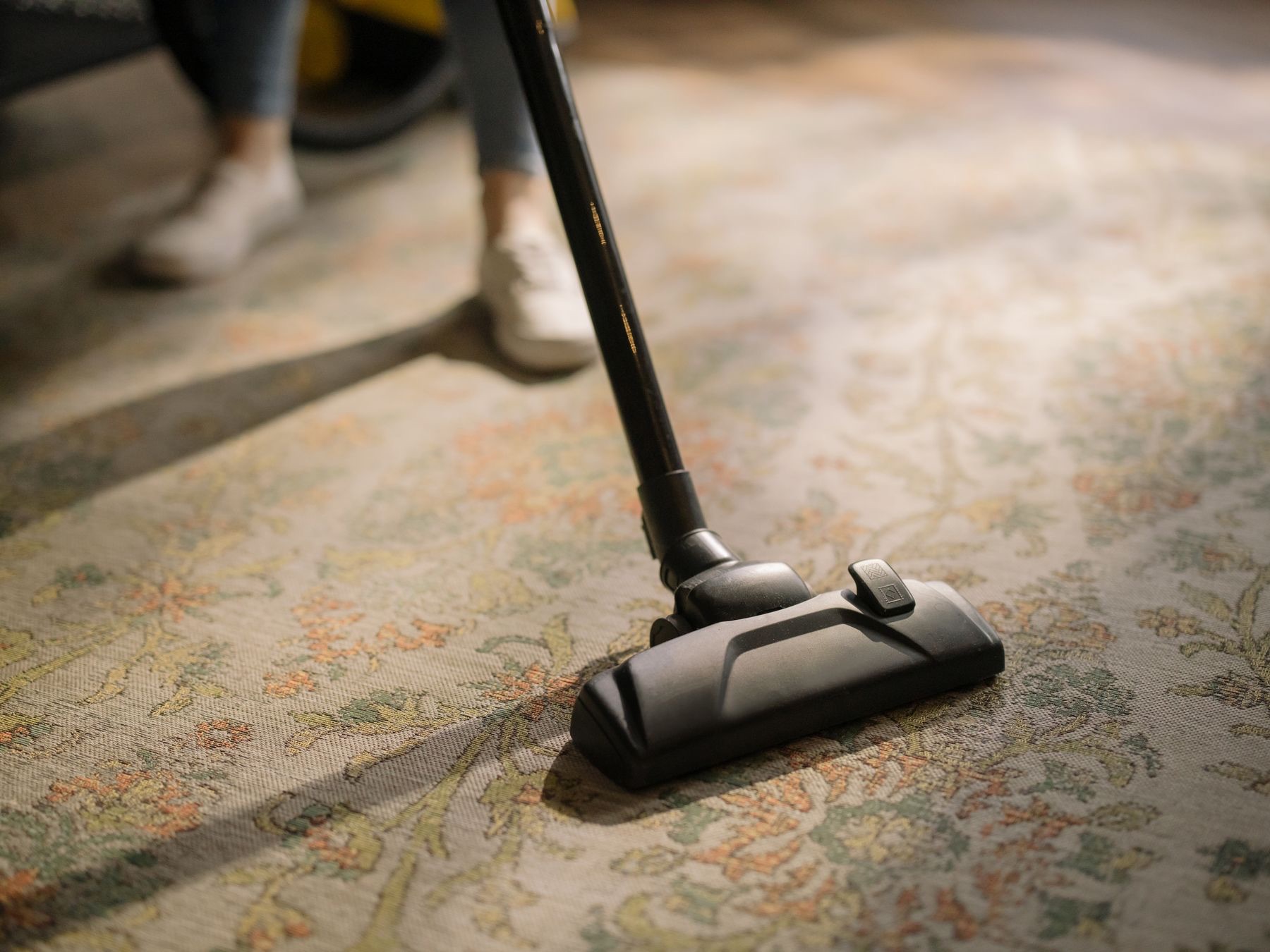
Looking at a tired area rug and wondering whether your carpet cleaner can bring it back to life? It might, but check the label before you fill the tank. Some colourfast synthetic rugs cope well with careful wet cleaning. Wool, silk, jute, sisal, hand-knotted and antique rugs can shrink, bleed or lose their shape, so they are usually better left to a specialist. If the rug is washable, vacuum both sides, test a hidden corner and use as little water as the job allows. Think about drying before you start too. A wet rug becomes surprisingly heavy, and dragging it across a wooden floor can spread dirty water or damage the backing.
01
Check whether the rug can get wet
Read the care label and look for a manufacturer cleaning code. Synthetic does not automatically mean washable because latex, glue, printed dye or backing can react badly to water. Do not use an extractor on a rug labelled dry-clean only. If the fibre is unknown, the dye transfers to a damp white cloth or the rug has value, use a rug-cleaning specialist.
Wool can felt, shrink or bleed. Silk is easily damaged by moisture and agitation. Jute and sisal absorb water and can brown, distort or develop odour. Hand-knotted and antique rugs deserve an expert assessment. Routine dry care starts with a suitable vacuum for rugs, used at a setting that does not pull fringe.
03
Use less water than you think
Fill the machine with warm or cold water only as its manual and the rug label direct. Add the approved formula at the measured dose. Start at the far edge and make straight, overlapping passes. Release solution while moving forward, then extract slowly. Do not hold the trigger in one place or repeatedly soak a stubborn mark.
Follow with suction-only passes until the machine recovers very little water. Clean fringe by hand only if the rug maker permits it; an extractor can tangle or tear it. The machine should roll smoothly without bunching the rug. If you need a dry-care tool for mixed floors, compare vacuums for carpet and hardwood.
04
Do not put it back while it is damp
Move air across both sides with open windows, fans or dehumidification suited to the room. Raise the rug on a clean rack only when its weight is supported evenly. Never put a damp rug back over wood or laminate, where trapped moisture can damage both surfaces. Keep furniture, feet and pets away until every part feels dry.
Check the backing and centre, not only the surface. A musty smell, rippled backing, colour bleed or prolonged dampness is a reason to stop home treatment and call a professional. For regular maintenance between deep cleans, a vacuum designed for carpet cleaning removes abrasive grit without introducing more moisture. Clean the extractor immediately after the job.
Empty both tanks, rinse the recovery parts and remove fibres from the brush or nozzle according to the manual. Leaving dirty water inside creates odour and makes the next job less hygienic. Once the rug is dry, vacuum it gently to lift the pile, then inspect the underside before replacing the pad. If furniture must return, wait until the rug and floor are dry and use clean protectors so damp metal or wood cannot transfer marks.
Sources and further reading
We use primary and specialist sources to check the principles in this article. Product recommendations are researched separately.


