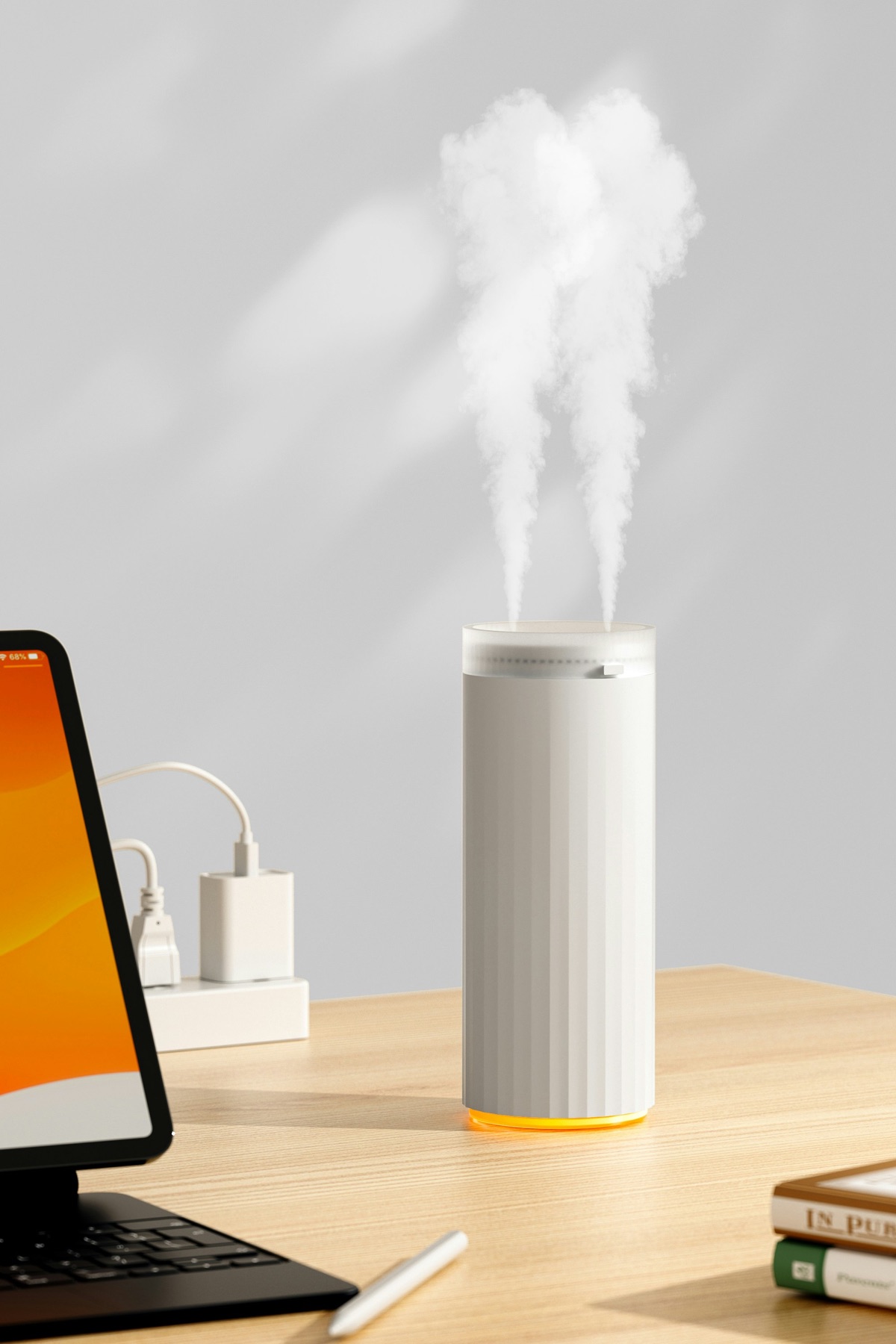
Wondering whether distilled water is really worth buying for your humidifier? In most ultrasonic models, it is the easiest way to cut down on white dust and crusty scale. Tap water contains minerals that can end up in the tank, or even on the furniture around it. Distilled water contains far fewer of them. It does not keep the humidifier clean on its own, though. You still need to empty the tank, let it dry and follow the cleaning instructions. The simple rule is to use the cleanest suitable water you can manage and watch for damp around the room, rather than trying to create the biggest possible cloud of mist.
01
Why distilled water usually makes sense
Tap water carries minerals such as calcium and magnesium. An ultrasonic humidifier can send some of those minerals into the air with the mist, where they settle as a pale powder on furniture. Distilled water has had most minerals removed, so the tank and room stay cleaner. It can also slow the hard scale that forms around the base and transducer.
That is useful, but it is not a hygiene shortcut. Water left in a warm tank can still support microbial growth, and dust can enter whenever you refill it. Empty stale water, dry the tank when the unit is idle and follow the maker’s cleaning schedule. The EPA advises frequent cleaning even when distilled water is used.
02
Is filtered water good enough?
Ordinary jug or fridge filters mainly improve taste and remove selected contaminants. They often leave much of the mineral content behind, so filtered water is not the same as distilled water. Bottled spring or mineral water can contain plenty of minerals too. Reverse-osmosis water may be low in minerals, but performance varies with the system and its maintenance.
Tap water may be acceptable if the manual permits it and your local water is soft. Expect more cleaning in a hard-water area. If buying bottles feels wasteful, a home distiller or properly maintained reverse-osmosis system may be practical. For the machine itself, our bedroom humidifier guide compares models intended for overnight use.
03
Your type of humidifier matters
Ultrasonic models create a fine mist by vibrating water, so minerals can travel with it. They benefit most clearly from distilled water. Evaporative humidifiers pull water through a wick; much of the mineral residue stays in that wick, which then needs replacement. Steam humidifiers boil water, leaving scale inside rather than spreading as much mineral dust, but they still need descaling.
A combination appliance adds another maintenance job rather than cancelling one. If you want filtration and humidity together, compare air purifiers with a humidifier. For a nursery, follow the unit’s safety advice and see our humidifiers for babies. Do not place a warm-mist unit where a child can reach it.
04
Keep the tank clean too
Start each day with fresh water. Empty rather than top up yesterday’s tank, then give the parts time to dry. Clean and descale exactly as the manual directs because acids, bleach and other products are not interchangeable. Never mix cleaners. Replace filters or wicks on schedule and sooner if they smell, discolour or become stiff with deposits.
Keep indoor humidity moderate. More mist is not always better: condensation on windows, damp surfaces or a musty smell means output is too high. A separate hygrometer gives a more useful reading than guessing from the visible plume. If particles rather than dry air are the main concern, read how to choose an air purifier before adding another appliance. Put the unit on a stable, water-resistant surface with space around its intake and mist outlet.
Do not point mist directly at walls, books, electronics or bedding. Wash your hands before handling clean internal parts, and never scrub a delicate ultrasonic plate with an abrasive tool. If output falls despite cleaning, check the wick, cartridge and manual troubleshooting steps before adding more solution or assuming the motor has failed.
Sources and further reading
We use primary and specialist sources to check the principles in this article. Product recommendations are researched separately.

