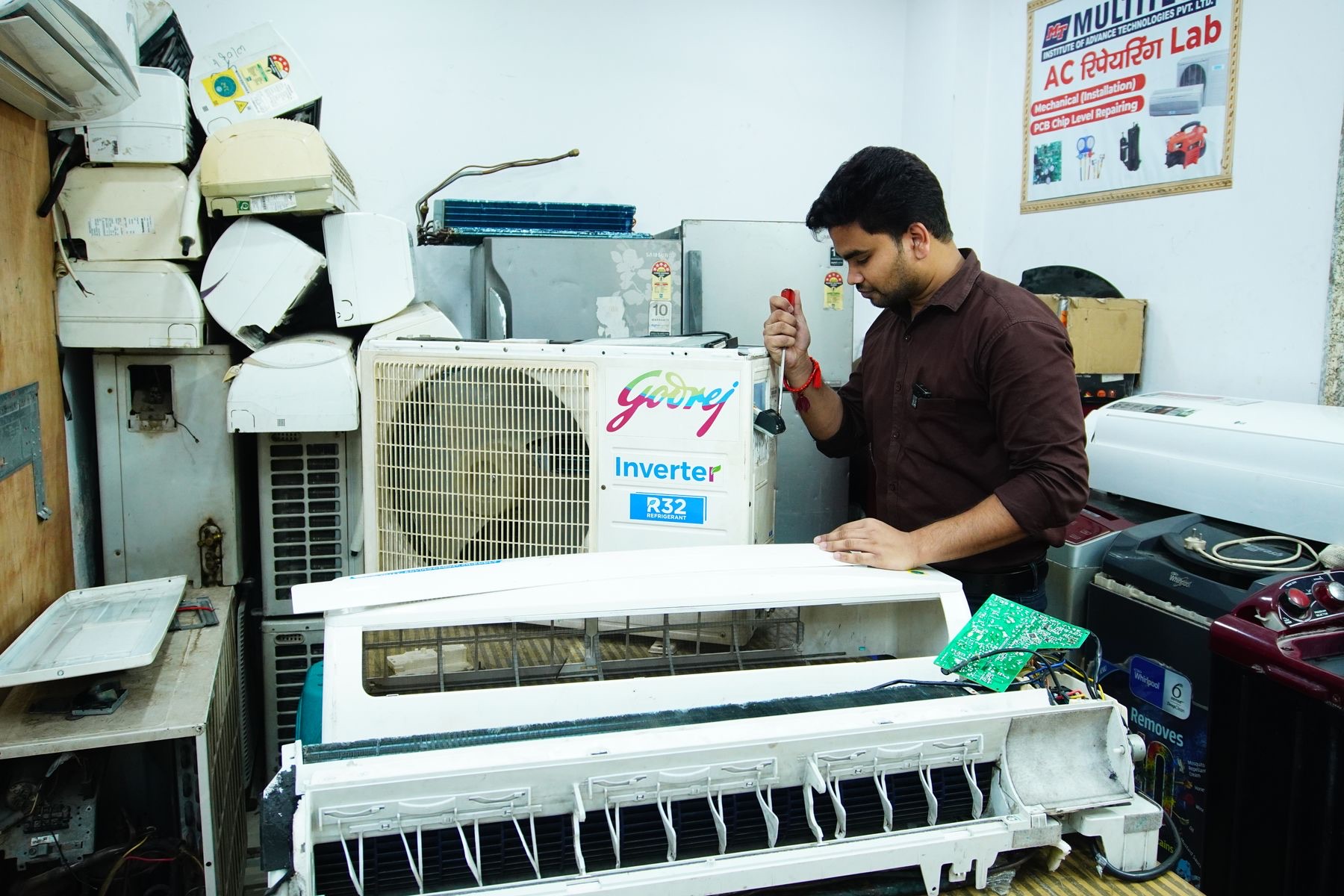
Has your AC started blowing less air, sounding strained or collecting more dust than usual? The filter is a sensible place to look. Changing one is often a five-minute job once you know where it lives. Turn the system off, take out the old filter and match the size exactly. Then fit the new one with its airflow arrow pointing towards the blower. Central systems, wall units and portable air conditioners do not all open in the same way, so let your manual overrule any general advice here. It also helps to have the replacement beside you before you begin. You can compare the frames and arrows directly instead of trying to remember which way the old one faced.
01
First, find the filter
Set the thermostat to off before opening a panel or return grille. The filter may sit behind a large return vent in a wall or ceiling, beside the air handler, or in a slot near the furnace blower. Some homes have more than one return and more than one filter. If you cannot identify it without removing service panels, stop and check the manual.
Window and through-wall units usually have a reusable mesh filter behind the front intake rather than a disposable central-HVAC filter. For separate room filtration, compare HEPA air purifiers and air purifiers for pets, but use the exact AC model manual for filter access instructions.
02
Copy the size from the old filter
Look for the printed dimensions on the frame and copy all three numbers. Nominal and actual measurements may differ, so do not guess from the grille opening. Note the filter type and efficiency rating accepted by the system. A denser filter is not automatically better because excessive resistance can reduce airflow and strain equipment.
Check whether the filter is disposable or washable. A pleated cardboard frame normally gets replaced. A washable mesh filter should be cleaned only by the method in its manual and allowed to dry fully before refitting. Never force a thick or bowed filter into a narrow slot.
03
Get the airflow arrow right
Before pulling the old filter out, photograph its direction. The arrow on a replacement filter points with the air as it moves towards the blower or air handler, not towards the room. At a return grille, that normally means the arrow points into the duct. At a furnace slot, it normally points towards the furnace cabinet.
Slide the filter in gently and make sure the frame sits flat with no large gaps around it. Close and secure the grille or access cover, then restore the thermostat setting. If the panel will not close, the filter size, thickness or orientation is wrong. Take it out and confirm the label rather than compressing it.
04
Check it before it becomes clogged
There is no honest universal replacement interval. Filter area, efficiency, pets, smoke, renovation dust, outdoor pollen and daily runtime all change how quickly it loads. Check a new filter monthly at first, then set a schedule based on what you see and the manufacturer’s limit. Replace it when it is visibly loaded or airflow falls.
A clean HVAC filter protects the system and can reduce recirculated dust, but it is not a room air purifier. If pollen or smoke remains a problem, see how to choose an air purifier and compare air purifiers for allergies. Call a technician for ice, leaks, burning smells or repeated filter collapse. Write the installation date on the new frame where it remains visible, or set a reminder based on your first month of checks.
Keep one correct spare in a dry cupboard so a dirty filter does not stay in place while you wait for delivery. After restarting the system, listen for whistling and check that the grille remains firmly closed. New noise can point to a gap, wrong size or excessive restriction. A filter should fit neatly without tape, crushing or improvised packing around its edges.
Sources and further reading
We use primary and specialist sources to check the principles in this article. Product recommendations are researched separately.
