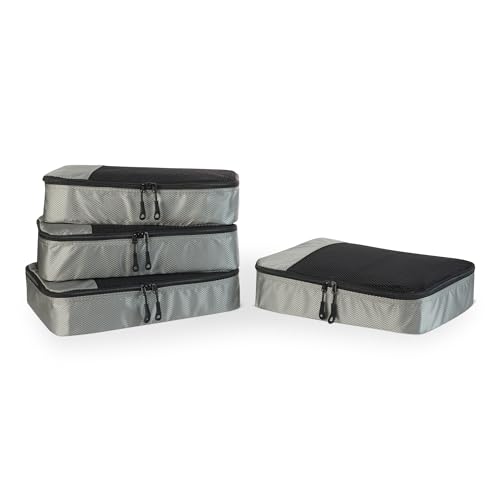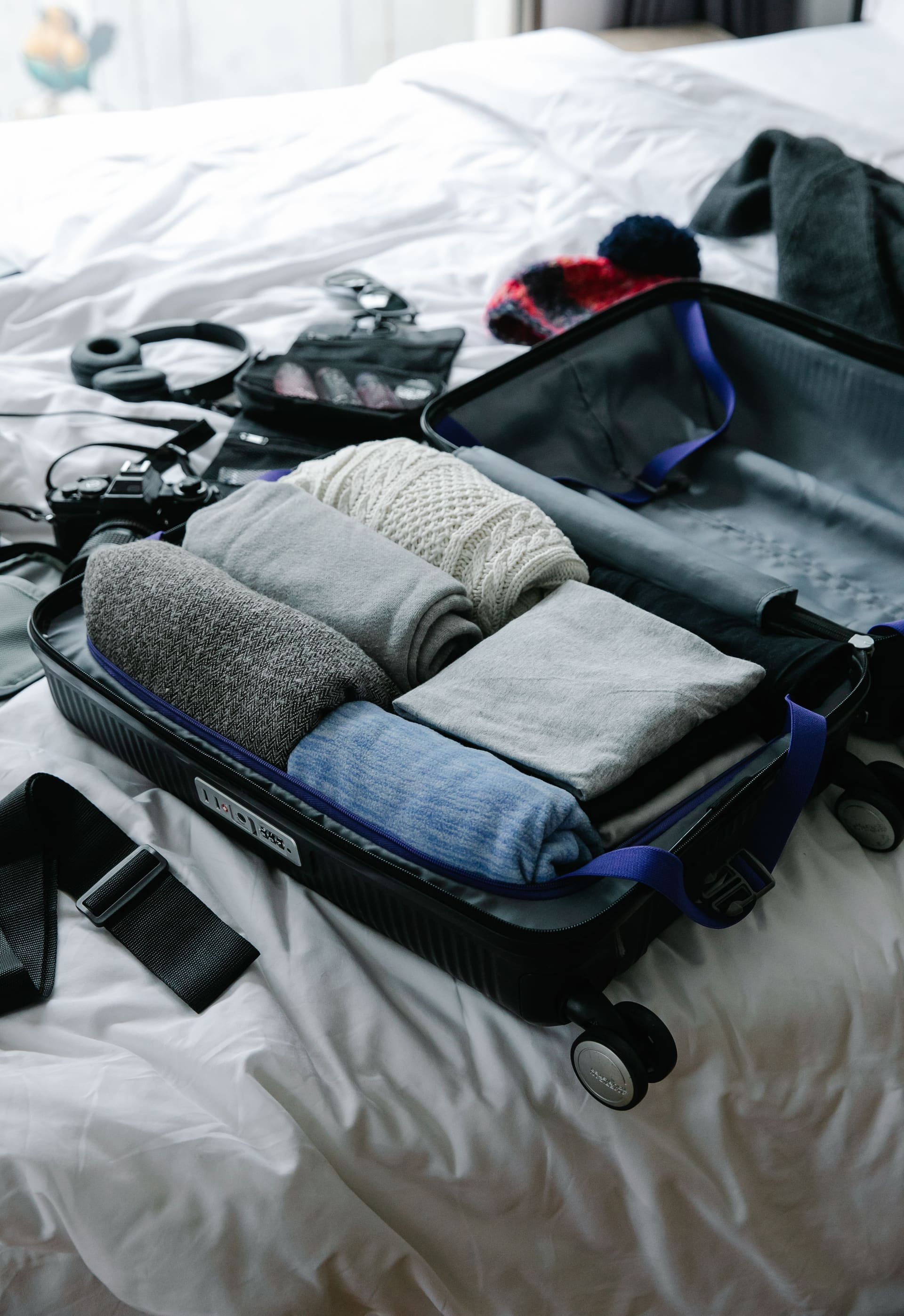
Packing cubes and compression packing cubes both help organize luggage, but they are designed for slightly different purposes.
Regular packing cubes are mainly about organization. Compression packing cubes add an extra zipper that squeezes the contents into a smaller volume. If you are deciding between the two, the best choice depends on whether you care more about keeping your suitcase organized or fitting more clothing into limited space.
01
What are regular packing cubes?
Standard packing cubes are lightweight fabric containers with a zipper. You place clothes inside each cube and then arrange the cubes in your suitcase or backpack. Different sizes can be used for different categories, such as T-shirts, underwear and trousers.
Their main advantage is organization. Instead of searching through an entire suitcase, you can remove one cube and immediately access the items you need.
If you have never used them before, our guide on how to use packing cubes explains the basic packing process, including how to choose sizes and arrange cubes around shoes and wheel housings.
02
What are compression packing cubes?
Compression packing cubes work in a similar way but usually have a second zipper around the outside. After filling the cube, you close the main zipper and then fasten the compression zipper. This pulls the upper and lower sections closer together and reduces the cube’s depth.
They work best with soft items that contain air and can flatten without damage. Thicker or structured clothing usually compresses less effectively, while overfilling can make the second zipper difficult to close.
- T-shirts
- Underwear
- Socks
- Lightweight sweaters
- Gym clothes
03
Do compression packing cubes save more space?
Yes, generally. Regular packing cubes can help you use suitcase space more efficiently, but they do not significantly reduce the volume of the clothes themselves. Compression cubes physically squeeze soft clothing into a smaller package.
The difference is most noticeable when you are packing bulky but compressible clothes. A cube full of T-shirts or soft knitwear may become much shallower, while jeans, tailored shirts and dense garments change less. Compress slowly so fabric does not catch in the zipper.
However, compression will not make heavy items lighter. You might create enough room for extra clothes but still exceed an airline’s baggage weight limit. A smaller-looking bag still needs to be weighed before you travel.
04
Which are better for carry-on luggage?
Compression packing cubes usually have an advantage in small carry-ons because every centimeter of space matters. They can be particularly useful when you want to travel without checked luggage or need to pack clothing for several days into a compact suitcase.
Regular cubes still work very well in carry-ons if your priority is simply staying organized. They are quicker to open, easier to repack and less likely to turn soft clothing into a dense block that is awkward to fit around the case.
Compare the practical formats in our guides to packing cubes for carry-on bags and packing cubes for carry-on suitcases. Check the cube dimensions against your own luggage rather than relying only on set names such as small, medium or large.
05
Which are better for backpacks?
Both types work well in travel backpacks. Regular cubes are often easier to pack because their shape remains predictable. Compression cubes can be useful when backpack volume is limited, although heavily compressed cubes can become quite dense and rigid.
For backpacks, several medium or small cubes are often more practical than one large cube. They fit around the curved sides of the pack and let you reach one category without unloading everything. Our travel backpack guide can help you compare the pack itself.
06
Are compression cubes heavier?
Usually slightly. Compression cubes require additional fabric, zippers and reinforcement, so they can weigh more than basic packing cubes. The difference is generally small, but ultralight travelers may prefer simple cubes or even pack without them.
The larger weight risk comes from filling the space you have created. Compression can make a bag look comfortably packed even after you add more clothing, so weigh the complete suitcase or backpack rather than judging it by appearance.
07
Packing cubes vs compression cubes: which should you choose?
Choose regular packing cubes if your main goals are organization, easy access and simple packing. They suit trips where you have enough room already, frequently open the cubes or value a predictable shape more than maximum capacity.
Choose compression packing cubes if you frequently travel with limited luggage space and want to reduce the volume of soft clothes. They are most useful when volume, rather than weight, is stopping the bag from closing.
Many travelers can also use both. For example, you could use a compression cube for bulky clothing and a regular smaller cube for underwear or accessories. If you are ready to compare larger-case options, see our guide to packing cubes in luggage.
Sources and further reading
We use primary and specialist sources to check the principles in this article. Product recommendations are researched separately.