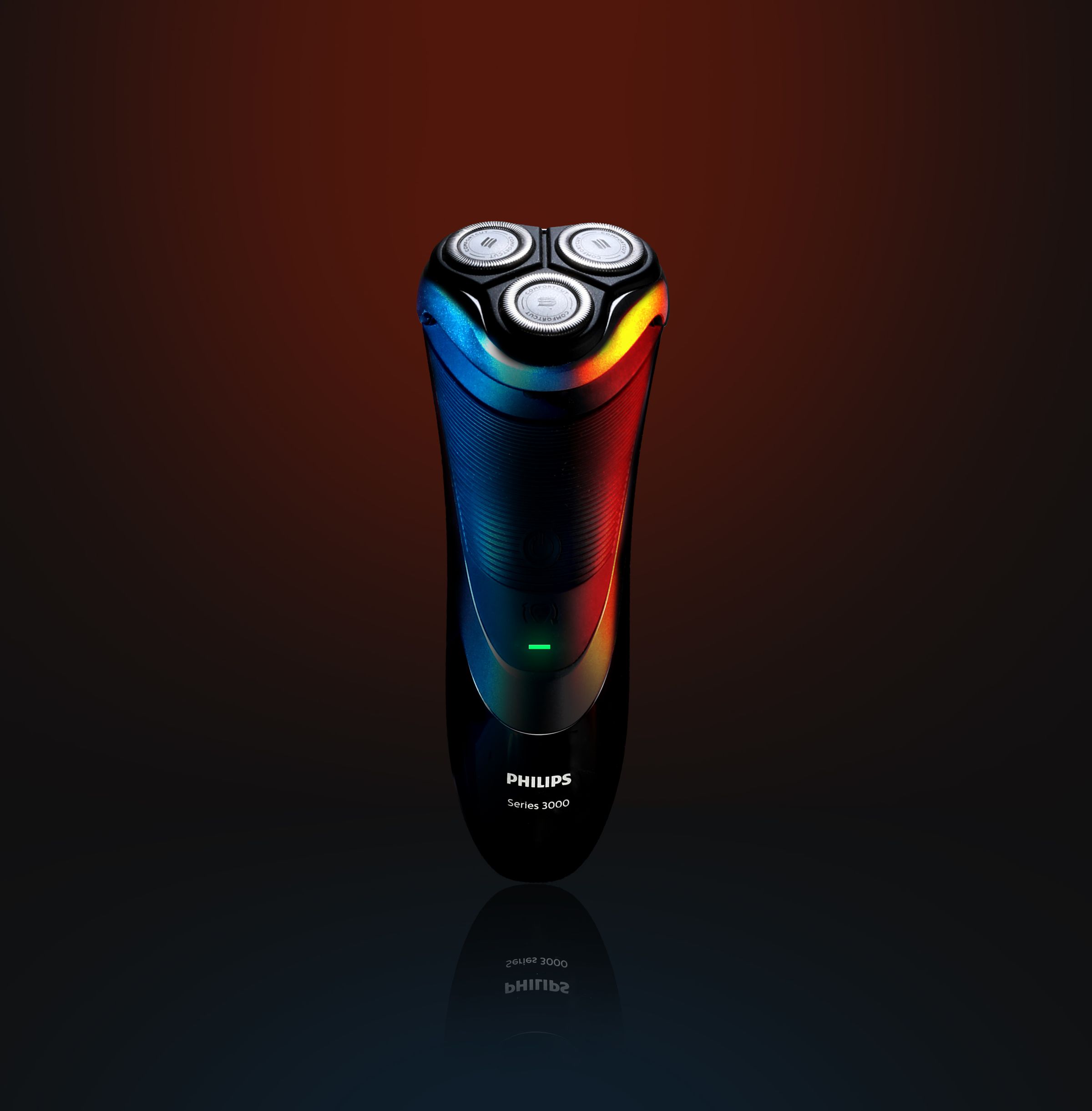
Electric shavers generally fall into two categories: foil and rotary.
Both cut facial hair using blades hidden underneath protective surfaces, but the shape of the shaving head and the way you move the shaver are different.
Choosing the right one depends on your facial hair, skin and shaving habits.
01
What is a foil shaver?
A foil shaver has one or more straight cutting elements covered by thin perforated metal foils.
Hair enters through the holes and is cut by rapidly moving blades underneath.
Foil shavers are typically used with straight movements across the face.
They are especially popular with people who shave frequently and want precise edges around sideburns or facial hair.
02
What is a rotary shaver?
A rotary electric shaver normally has three circular shaving heads.
Each head contains rotating cutters beneath an outer guard.
You move a rotary shaver across your face using small circular movements.
The individual heads can adapt to the chin, jaw and other curved areas.
03
Which is better for sensitive skin?
Foil shavers are often recommended for sensitive skin because their straight shaving action can make it easier to control how many times you pass over each area.
However, comfort varies from person to person.
A good rotary shaver used with light pressure can also be very comfortable.
See our guide to electric shavers for sensitive skin if irritation is your main concern.
04
Which is better for thick facial hair?
Rotary shavers can perform particularly well with coarse hair or facial hair that grows in different directions.
Their circular heads can approach hairs from several angles.
Foil shavers often perform best when shaving shorter growth regularly.
05
Which provides a closer shave?
High-quality models of both types can shave closely.
Foil shavers are often associated with a slightly closer, more precise result, but differences between individual shavers matter more than the category alone.
06
Which is better around the jaw and neck?
Rotary heads naturally adapt well to curved surfaces.
This can make them useful around the jaw and neck.
Foil shavers work well too, but may require shorter strokes and more deliberate positioning.
07
Which is easier to clean?
Both can be easy to maintain if the shaving head is washable.
Many modern shavers can be rinsed under running water, while premium models may include automatic cleaning stations.
Always follow the manufacturer's instructions.
08
Rotary vs foil: which should you buy?
Choose a **foil shaver** if you shave frequently, prefer straight movements and value precision.
Choose a **rotary shaver** if you have thicker growth, shave less frequently or have hairs that grow in several directions.
Our guide to the best electric shavers compares options across both designs.
09
A practical way to decide
The better format is the one that matches your growth pattern and technique. Foils reward short, controlled strokes and make straight edges easier to see. Rotary heads cover curved areas well, but they work best when you use small overlapping circles rather than long, forceful sweeps.
Do not judge closeness by pressing harder. Excess pressure can increase heat and friction while flattening hairs away from the cutters. If several passes are needed, trim longer growth first, slow down around the neck and check whether the head is clean or the cutting parts are worn.
Wet-and-dry capability is available in both designs, so it should be evaluated separately from head shape. Read our wet versus dry shaving comparison if lubrication and shower use matter. Confirm that the exact model, not merely the product family, supports the method you want.
Replacement parts can change long-term value. Before buying, check the price and availability of the correct foil, cutter block or rotary head and the recommended replacement interval. A cheaper shaver becomes frustrating if its cutting unit is difficult to find after the first year.
Give a new system a short adjustment period rather than switching techniques during every shave. Record where pulling or redness appears, shorten longer hairs first and change only pressure or direction at one time. If skin comfort is the deciding factor, compare the models in our sensitive-skin electric shaver guide.
Sources and further reading
We use primary and specialist sources to check the principles in this article. Product recommendations are researched separately.

