The 5 Best Audio Interfaces for iPad
An interface that works on your laptop does not automatically make a painless iPad rig. The port may fit, yet the tablet may not deliver enough power for the interface and a condenser mic. I would check three things before the preamp specification: iPadOS support, the exact cable or adapter, and how the interface gets power when everything is connected.
The Volt 1 is my first pick for one voice or guitar because Universal Audio explicitly documents iPad support, with a warning that some tablets need external power. For two microphones at a lower price, the M-Track Duo is more useful than a mystery pocket sound card. The MOTU M4 is the larger choice when you really need four analog inputs, not just a higher number on the box.
Our top 5 audio interfaces for ipad
Swipe to compare price, rating and best use →
| Product | Price | Rating | Best for |
|---|---|---|---|
01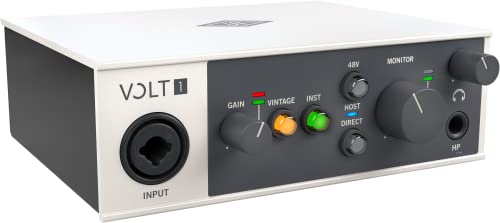 Universal Audio Volt 1Details ↓ Universal Audio Volt 1Details ↓ | — | 4.6/5Amazon | Best solo iPad setup |
02 M-Audio M-Track DuoDetails ↓ M-Audio M-Track DuoDetails ↓ | — | 4.4/5Amazon | Best budget for two microphones |
03 MOTU M4Details ↓ MOTU M4Details ↓ | — | 4.6/5Amazon | Best for four input sources |
04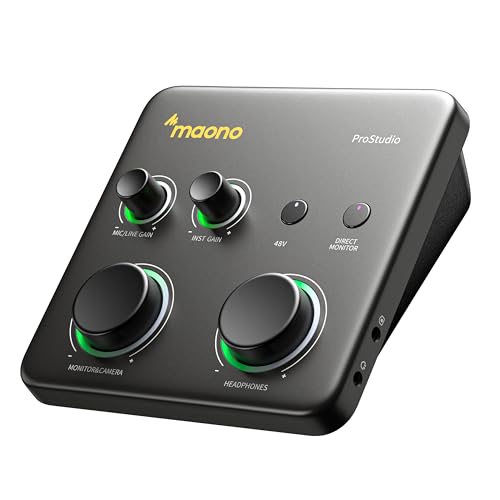 MAONO P1Details ↓ MAONO P1Details ↓ | — | 4.4/5Amazon | Best phone and tablet crossover |
05 Focusrite Scarlett Solo 4th GenDetails ↓ Focusrite Scarlett Solo 4th GenDetails ↓ | — | 4.6/5Amazon | Best familiar desktop crossover |
01 — Universal Audio
Best solo iPad setupUniversal Audio Volt 1
I would begin with the Volt 1 for one microphone or guitar and an iPad. Universal Audio explicitly lists iPadOS support, a single combo mic input, an instrument input and a Vintage preamp mode. The point is a clear, supported path to recording rather than paying for inputs you will never fill.
It takes first place for documented mobile compatibility, but a tablet may need an external power source and a connector adapter. The included cable is USB-C to USB-A, so match your exact iPad port before ordering. Choose the M-Track Duo if two separate mic inputs matter more than Volt's one-person setup.
Specifications: Universal Audio Volt 1 iPad requirements ↗
View on Amazon ↗A solo voice or instrument recorded on iPad.
You need two XLR microphones at once.
What I like
+Maker-documented iPad support and a simple solo layout.
What to weigh
−Cable or extra power may be needed on a tablet.
- Mic inputs
- 1
- Resolution
- 24-bit / 192 kHz
02 — M-AUDIO
Best budget for two microphonesM-Audio M-Track Duo
The M-Track Duo is the budget choice I would make for a two-person interview. M-Audio lists two combo inputs and iOS support, so you can give each voice its own microphone rather than squeezing them through one input. Its direct-monitor switch also helps you hear the source without relying on software monitoring.
It needs the right USB-B connection and tablet power plan; the maker includes a USB-B to USB-A cable, not a universal iPad cable. I rank it behind Volt for a solo creator because the extra input is wasted there. Check support for your exact iPadOS version and app before using it as a mobile studio.
Specifications: M-Audio M-Track Duo specifications ↗
View on Amazon ↗Two XLR mics on a limited budget.
You want one USB-C cable with no adapter planning.
What I like
+Two physical combo inputs and direct monitoring.
What to weigh
−USB-B cable and power need thought on iPad.
- Inputs
- 2 mic/line/instrument combo
- Conversion
- Up to 48 kHz
- Monitoring
- Direct mono or stereo
- Connection
- USB-B; bus powered
03 — MOTU
Best for four input sourcesMOTU M4
The M4 is the one I would choose if a podcast or music session genuinely needs four analog sources. Two mic preamps, two additional line inputs and clear front meters make it easier to set levels than a tiny one-channel dongle. MOTU's M Series manual documents class-compliant iOS operation.
It ranks third because most iPad sessions do not need four inputs, and the higher price buys capacity rather than simpler setup. Plan tablet power and cabling before travel. For one voice, buy the Volt; for two microphones without extra line sources, spend less on the M-Track Duo.
Specifications: MOTU M Series user guide ↗
View on Amazon ↗A small iPad session with several simultaneous sources.
You only record one mic or want the smallest kit.
What I like
+Four analog inputs and visible level meters.
What to weigh
−Higher price, larger box and mobile power planning.
- Analog inputs
- 4
- Mic inputs
- 2
04 — MAONO
Best phone and tablet crossoverMAONO P1
The P1 is for someone who moves a compact recording rig between a phone, iPad and laptop. The listed version mentions phone and iPad use and 70 dB of gain, which may appeal if a low-output dynamic microphone is part of the kit.
I place it below the Volt and M-Track because the precise mobile cable, power path and app support deserve confirmation on the exact offer. A large gain number alone says little about noise or reliability. If you will record on an iPad every week, I would pay for the better documented Volt setup.
Specifications: Exact Amazon product listing ↗
View on Amazon ↗A compact rig used with several device types.
You need a fully documented cable and power path now.
What I like
+Listed phone and tablet use with ample stated gain.
What to weigh
−Mobile connection details need verifying.
- ProductType
- audio interface
05 — Focusrite
Best familiar desktop crossoverFocusrite Scarlett Solo 4th Gen
The Scarlett Solo makes sense if you already know its desktop workflow and sometimes move the same mic to an iPad. Focusrite lists both Lightning and USB-C iPad compatibility for the fourth-generation Solo, with one mic and one instrument input.
I rank it fifth for a tablet-first buyer because the physical box and power arrangement are less travel-light than a dedicated mobile setup. Focusrite's connection guide is worth following before assuming a single cable is enough. Choose it when you also need a regular computer interface; choose Volt for a simpler solo iPad shortlist.
Specifications: Focusrite iPadOS compatibility ↗
View on Amazon ↗A desk-based Scarlett user who also records on iPad.
Your whole kit must be as small as possible.
What I like
+Official support for Lightning and USB-C iPads.
What to weigh
−Cables and bus power require setup checks.
- Inputs
- 1 mic, 1 line/instrument
- Conversion
- 24-bit / 192 kHz
- Monitoring
- Direct monitor and loopback
- Connection
- USB-C (USB 2.0 protocol)
Our process
How we picked.
We compare five relevant products for different needs, using documented specifications, clear use cases and practical trade-offs. Our goal is to make the differences clear and help you choose with confidence.
- 01Relevance
Each product must fit the guide’s intended use, audience and requirements.
- 02Specifications
We compare the key product details that meaningfully affect the buying decision.
- 03Use case and fit
We compare the intended use, configuration and practical fit of every selected product.
- 04Strengths and limitations
We explain where each option performs best and the compromises to consider.
Good questions
FAQ — Audio Interfaces for iPad
01Will a USB-C plug alone guarantee iPad compatibility?+
No. Check the maker’s iPadOS support, the recording app, cable and power requirement. A Lightning iPad generally needs an appropriate adapter, and some bus-powered interfaces need external power.
02Do I need phantom power for an iPad microphone?+
A condenser XLR mic may need 48V phantom power from the interface. A dynamic mic typically does not; confirm the microphone’s own requirements before connecting it.
03How many inputs do I need for a podcast?+
One XLR mic input is enough for a solo voice. Two people with separate microphones need two physical mic inputs; a four-input interface is useful only if you intend to record more sources simultaneously.
The short answer
Start with the Universal Audio Volt 1.
I recommend it for a solo voice or instrument recorded on ipad. Choose something else if you need two xlr microphones at once.
View on Amazon ↗Keep looking
Related guidesThe 5 Best Audio Interfaces for Guitar by Recording Setup
Five Focusrite, Audient, Arturia and Universal Audio interfaces for guitar, vocals, monitoring and layered home recording.
The 5 Best Audio Interfaces for Vocals
Five Volt, Focusrite, MAONO, MOTU and Shure interfaces compared by microphone inputs, monitoring and mobile use.

The 5 Best Podcast Audio Interfaces by Number of Hosts
Five Audient, M-Audio, Zoom and Focusrite interfaces for solo streams, two hosts, four mics and larger studios.
The 5 Best Audio Interfaces for Streaming by Host Count
Five Focusrite, Zoom, Audient and Behringer interfaces for solo streams, hardware loopback and multi-mic rooms.