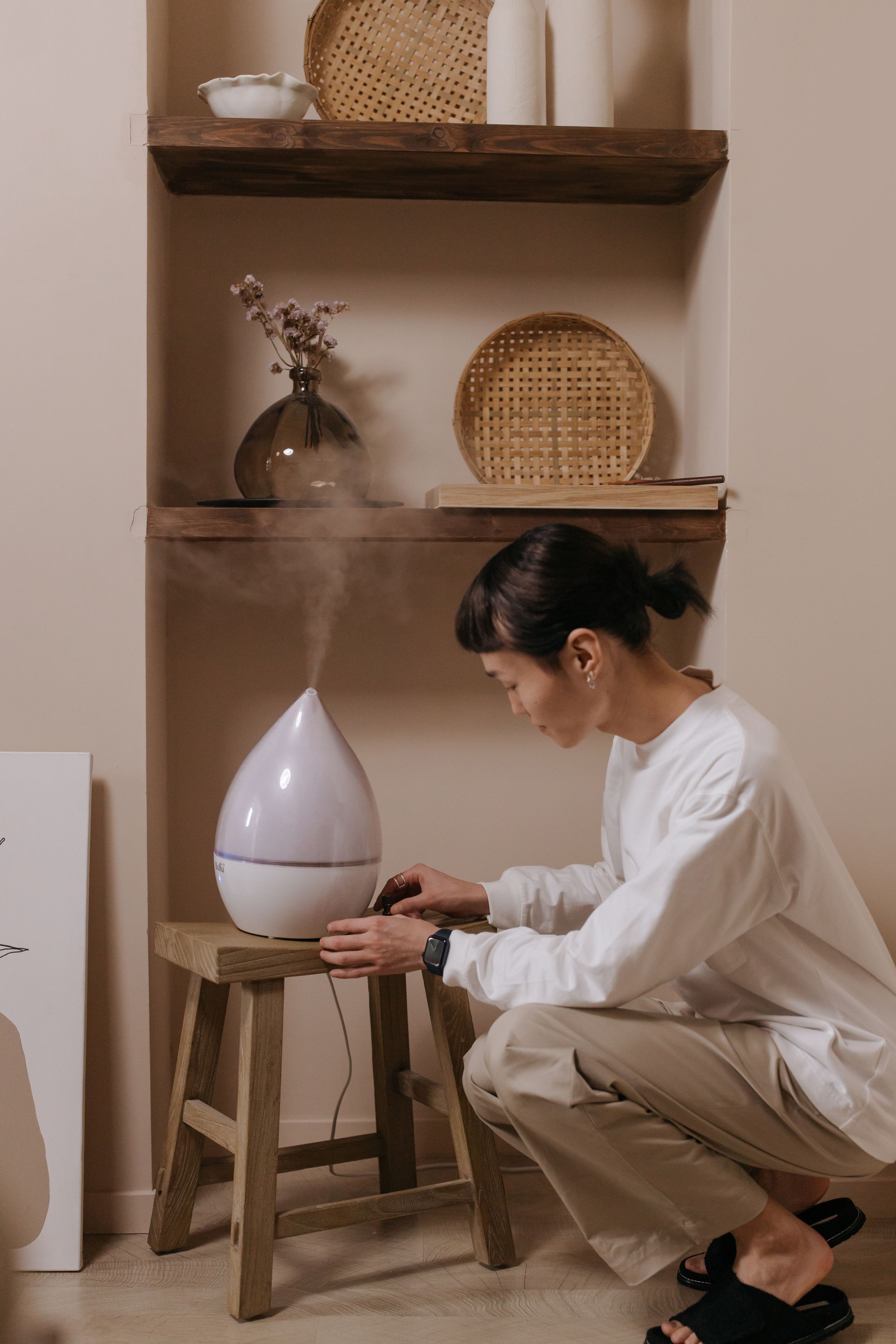
Air purifiers and humidifiers are both used to improve indoor comfort, but they perform completely different jobs.
An air purifier removes particles and contaminants from the air. A humidifier adds moisture.
Understanding that distinction makes it much easier to decide whether you need one, the other or both.
01
What does an air purifier do?
An air purifier pulls room air through one or more filters.
Many models use a HEPA filter designed to capture small airborne particles such as dust, pollen and pet dander.
Some also include activated carbon filters that can help reduce certain odors and gases.
Air purifiers do not normally add moisture to the room.
If filtration is your priority, see our guide to the best air purifiers.
02
What does a humidifier do?
A humidifier releases water vapor or mist into the room.
Its purpose is to increase indoor humidity.
Dry indoor air can be especially common during winter when heating systems are running.
Unlike an air purifier, a humidifier is not primarily designed to remove dust or allergens from the air.
03
Air purifier vs humidifier for allergies
An air purifier is generally more directly relevant to airborne allergens because its filter captures particles as air passes through the machine.
A humidifier may make a dry environment feel more comfortable, but excess humidity can create other problems.
Keeping indoor humidity within an appropriate range is important.
04
Which is better for dry air?
A humidifier.
Air purifiers circulate and filter air but do not significantly increase humidity.
If your main complaint is dry indoor air, dry skin or static electricity, increasing humidity is the more direct solution.
05
Can you use both together?
Yes.
There is no fundamental reason you cannot operate an air purifier and humidifier in the same room.
Place them far enough apart that humidifier mist does not enter the air purifier directly.
Excess moisture reaching filters can reduce performance and potentially create maintenance problems.
06
Are combination units worth it?
Some appliances combine purification and humidification.
They can save floor space and simplify controls, but they are generally more complex to clean.
Separate devices allow you to replace or upgrade each appliance individually.
The better option depends on your room and how often you need each function.
07
Maintenance differences
Air purifiers require regular filter inspection and replacement.
Humidifiers require frequent water changes and cleaning to prevent mineral buildup and microbial growth.
Neglecting maintenance can significantly reduce the usefulness of either device.
08
Which should you choose?
Choose an **air purifier** if your main concern is airborne particles, dust, pollen or pet dander.
Choose a **humidifier** if your home has excessively dry air.
Use both if you have separate air-quality and humidity problems.
09
A practical way to decide
Measure the problem before choosing a device. A particle monitor can provide context for smoke or dust, while a hygrometer shows whether the room is actually dry. Comfort alone can be misleading because temperature, airflow and irritation from other sources can feel similar.
For filtration, match clean-air delivery to the real room and leave the intake and outlet clear. Our guide on how to choose an air purifier explains room sizing, filter costs and noise. A purifier cannot repair damp or remove established mold from building materials.
For moisture, aim for the range recommended by current public-health guidance and reduce output if windows or walls become damp. Clean the tank on schedule and use water permitted by the manufacturer. Our guide to distilled water in a humidifier explains mineral dust and why clean water does not replace cleaning.
When operating both devices, separate them so visible mist is not drawn directly into the purifier. Check the filter for dampness and move the units farther apart if necessary. Combination models save space, but their filter and water systems still need independent maintenance.
Noise also determines whether either appliance is used consistently. Compare sound at the normal operating speed rather than the quietest sleep setting alone. For dry bedrooms, our bedroom humidifier guide highlights capacity, cleaning access and controls intended for overnight use.
Sources and further reading
We use primary and specialist sources to check the principles in this article. Product recommendations are researched separately.


