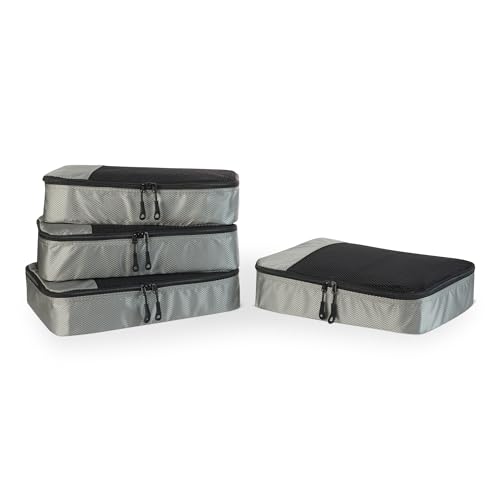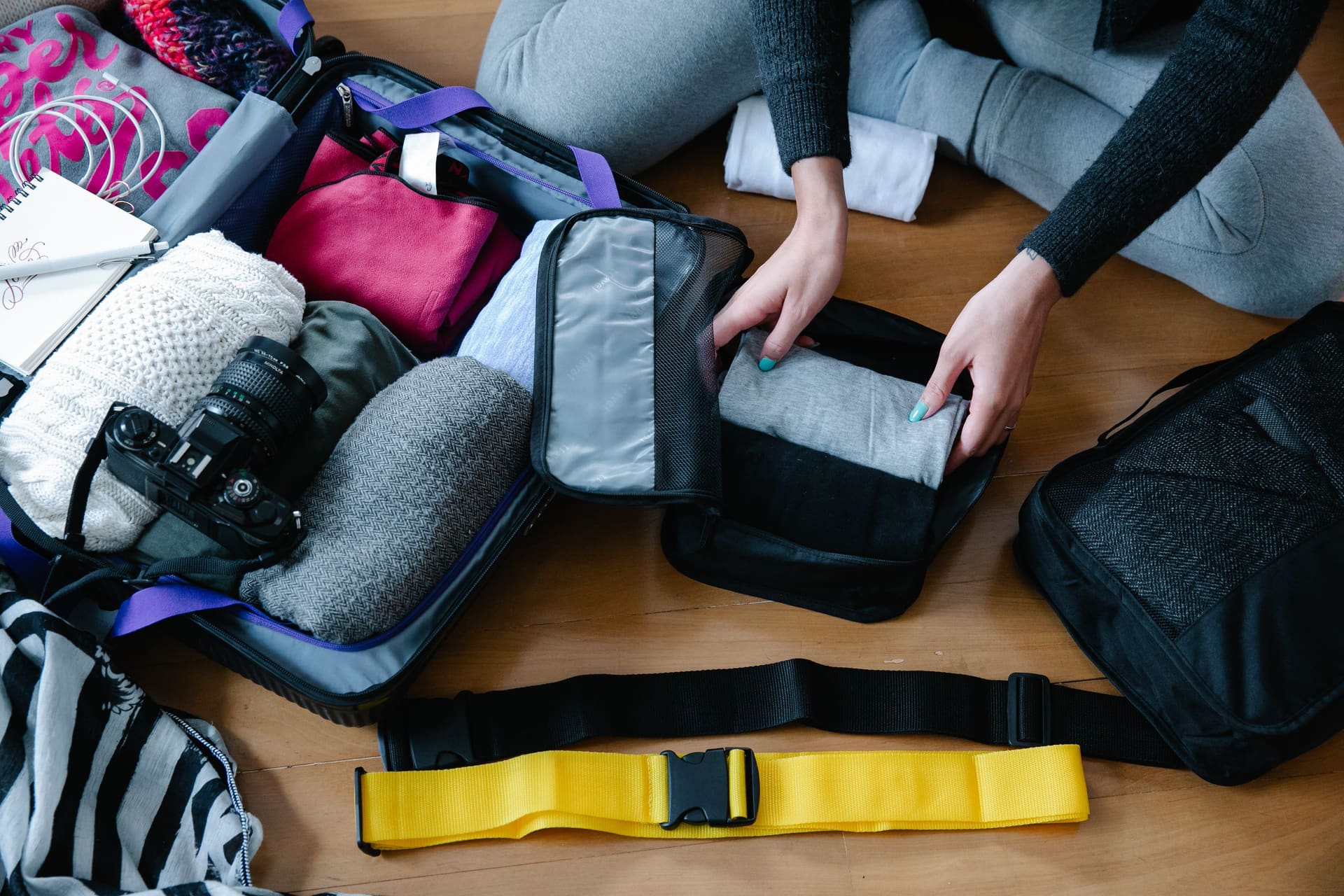
Compression packing cubes are travel organizers designed to keep clothes together while also reducing the amount of space they occupy inside a suitcase or backpack.
They look similar to regular packing cubes, but most compression models have an additional zipper around the outside. Once the cube is packed, closing this second zipper pulls the top and bottom closer together, compressing the contents. They can be particularly useful for carry-on travel, but they work better with some types of clothing than others.
01
How do compression packing cubes work?
A typical compression packing cube has two zipper systems. The first zipper opens the main compartment. You place your clothes inside and close it just as you would with a normal packing cube.
The second zipper runs around the outside of the cube. When you close it, excess fabric folds inward and the cube becomes thinner. This does not remove air in the same way as a vacuum bag. Instead, the zipper applies mechanical pressure to the contents and reduces their overall volume.
If you are new to packing organizers, our guide on how to use packing cubes covers the basic packing process. Compression works best after clothes have already been folded or rolled into an even layer.
02
What should you put in compression packing cubes?
Soft clothing usually compresses best. Items that contain a lot of trapped air generally show the biggest reduction in volume, especially when they can flatten without losing an important shape.
- T-shirts
- Underwear
- Socks
- Lightweight sweaters
- Gym clothes
- Pajamas
- Soft shorts
Rigid or highly structured garments are less suitable. Dress shirts, blazers and some trousers may wrinkle more when compressed tightly. Dense items such as jeans can go inside, but their volume will change less than soft knitwear.
Avoid putting fragile objects, shoes, liquids or anything with sharp edges inside a clothing cube. Those items need their own suitable protection and may prevent the compression zipper from closing evenly.
03
How much space can compression packing cubes save?
There is no fixed percentage because it depends heavily on what you pack. A cube filled with lightweight T-shirts can usually be compressed considerably more than one containing jeans.
The main advantage is reducing the depth of bulky clothing so that it fits more easily alongside other items in your luggage. Compression cubes can therefore make a noticeable difference in a small suitcase, although they do not increase the airline’s actual baggage allowance.
For a direct comparison of the two formats, see packing cubes vs compression packing cubes. The dimensions of the expanded and compressed cube are more useful than a vague space-saving claim.
04
Do compression packing cubes reduce luggage weight?
No. Compression reduces volume, not weight. If your clothes weigh 5 kg before compression, they will still weigh approximately 5 kg afterwards. The cube itself also adds a small amount of fabric, zipper and reinforcement.
This can create a problem: because compression makes additional space available, it becomes easier to overpack and exceed an airline’s weight restriction. Always weigh your complete luggage separately if your airline has a strict limit.
05
How do you pack a compression cube properly?
Start by folding or rolling your clothes neatly rather than pushing them into the cube randomly. Fill the cube evenly so that one side is not significantly thicker than the other.
Close the main zipper first. If it requires excessive force, remove a few items before trying to compress the cube. Keep fabric away from the zipper path and check the corners before moving to the outer zip.
Next, close the compression zipper gradually. Moving around the cube rather than pulling forcefully from one point can make the process easier and reduce stress on the zipper. If it jams or the seams distort, stop and redistribute the contents.
For compact luggage layouts, compare our guides to packing cubes for carry-on bags and packing cubes for carry-on suitcases.
06
Compression cubes vs vacuum bags
Both products reduce clothing volume, but they work differently. Vacuum bags remove air through a valve or roll-out system and can achieve much stronger compression.
Compression packing cubes use only zippers, so they require no additional equipment and can easily be reopened and repacked during a trip. For most travelers, that convenience makes compression cubes more practical for everyday travel.
Vacuum bags can be useful for bulky clothing or storage, but their contents often emerge more creased. Check garment-care advice before compressing insulated clothing for long periods, because sustained pressure may affect some fillings.
07
Are compression packing cubes worth it?
They are most useful for travelers who regularly struggle with luggage space. Carry-on travelers, backpackers and people packing for longer trips can benefit from compressing soft clothing into smaller packages.
If you normally travel with a large checked suitcase and rarely run out of room, standard cubes may be enough. Compression also adds little value when dense clothing or the airline weight limit is the real constraint.
You can combine both types: use compression for soft, bulky clothes and standard cubes for items you access frequently. To compare sets for larger cases, see our guide to packing cubes in luggage.
Sources and further reading
We use primary and specialist sources to check the principles in this article. Product recommendations are researched separately.