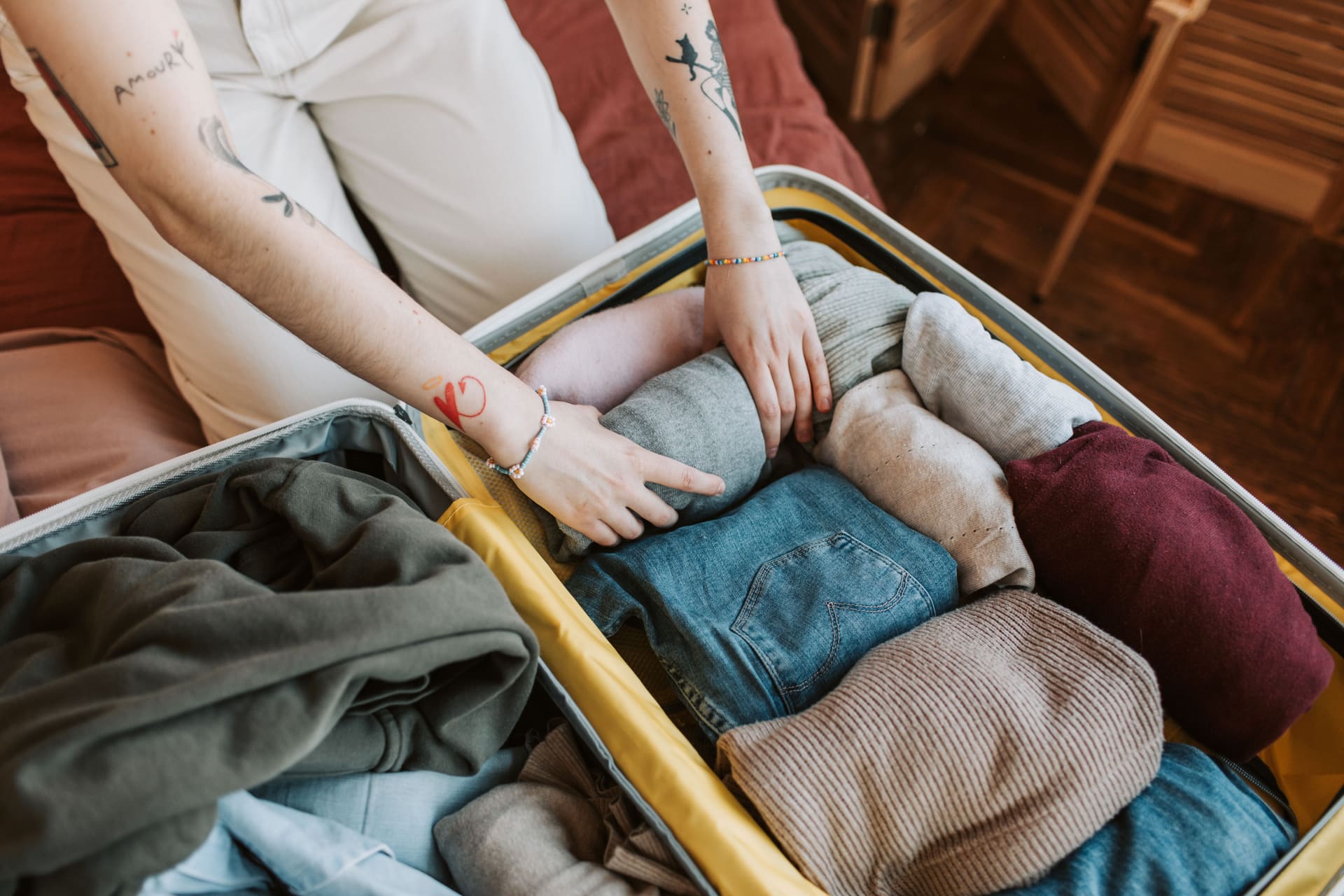
Packing cubes are especially useful in carry-on luggage, where every bit of space matters. They help separate clothes, keep smaller items under control and make it easier to unpack without turning your suitcase into a pile of loose clothing.
The key is not simply filling every cube. You need to choose the right sizes, pack them efficiently and arrange them around the shape of your carry-on. Start with the airline limits and the case you will actually use, then build the packing system around both.
01
Choose the right packing cube sizes
For most carry-ons, a mix of one medium cube and two or three smaller cubes works better than several large ones. Large cubes can take up too much of the suitcase and leave awkward gaps around them.
A practical setup might include the following pieces. Lay the empty cubes inside the case before filling them so you can see how their dimensions fit around the wheels, handle rails and curved corners.
- One medium cube for T-shirts and tops
- One small cube for underwear and socks
- One small cube for shorts or sleepwear
- One optional compression cube for bulkier clothes
If you are still choosing a set, see our guide to the best packing cubes for carry-on bags. Product labels such as small and medium are not standardized, so compare the stated measurements.
02
Plan what you actually need
Before filling the cubes, lay out everything you want to take. Carry-on space disappears quickly, so remove duplicate items and clothes that only work with one outfit.
Try to choose pieces that can be worn more than once or combined with several outfits. Packing cubes make organization easier, but they cannot compensate for bringing too much. Leave a little room for anything acquired during the trip.
03
Roll lightweight clothes
Rolling works particularly well in small packing cubes because it keeps items compact and easy to see. T-shirts, underwear, shorts and other lightweight clothes are good candidates for rolling.
For thicker garments such as trousers or sweaters, folding can work better because it creates flatter layers. Whichever method you use, fill each cube evenly rather than creating a hard lump on one side.
If you need a more general packing method, read our guide on how to use packing cubes. Stop before the main zipper needs excessive force.
04
Use compression cubes for bulky clothing
Compression packing cubes can be useful when you are trying to fit several days of clothes into a small carry-on. After packing the cube, a second zipper reduces its depth and squeezes the contents into a smaller space.
They work particularly well with soft clothing but will not significantly compress dense items such as jeans. Close the outer zipper gradually and keep fabric clear of the teeth to avoid snags.
You can learn more in our guide to how compression packing cubes work. Remember that compression creates room without reducing the weight of the clothes.
05
Pack the largest cube first
Start with your largest or heaviest cube and place it against the flat side of the suitcase. Then arrange smaller cubes around it. In a wheeled case, keeping denser items near the wheel end can make it more stable when upright.
Try to avoid stacking several thick cubes directly on top of each other. Placing them side by side usually uses the dimensions of a carry-on more efficiently. Use gaps for belts, chargers or other small accessories that are already protected.
06
Keep shoes outside the cubes
Shoes usually fit better directly inside the suitcase. Place them along the sides or near the wheel end, preferably inside shoe bags to keep clothing clean.
You can fill the clean interiors of shoes with socks or other small, soft items to avoid wasting that space. Do not place hard soles against delicate clothes, and keep footwear away from anything that could leak.
07
Keep liquids and essentials accessible
Do not bury items that you may need during airport security or the flight. Your toiletry bag, passport, medicine, electronics and charging cables should remain easy to reach, especially if the main carry-on may be gate-checked.
If you are flying with liquids, keeping them in a separate carry-on toiletry bag also helps protect clothes from spills. Check the current screening and airline rules before leaving home.
08
Do not forget the weight limit
Packing cubes can make it surprisingly easy to fit more into a small suitcase. However, compressing clothing does not reduce its weight. The cubes themselves add a little weight too.
Check both your airline’s carry-on dimensions and weight allowance before travelling. Our carry-on luggage size guide explains why limits vary. If your bag looks compact but weighs too much, you may still have to check it at the airport.
Sources and further reading
We use primary and specialist sources to check the principles in this article. Product recommendations are researched separately.


