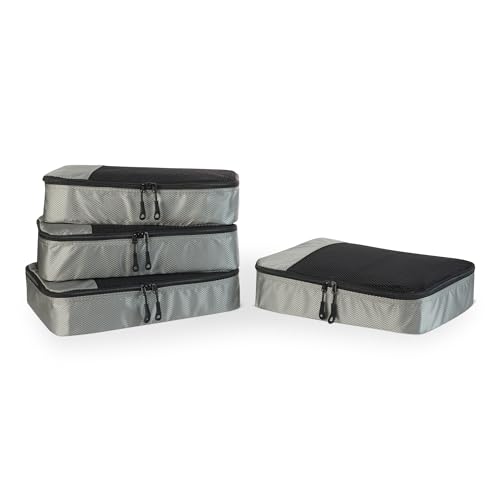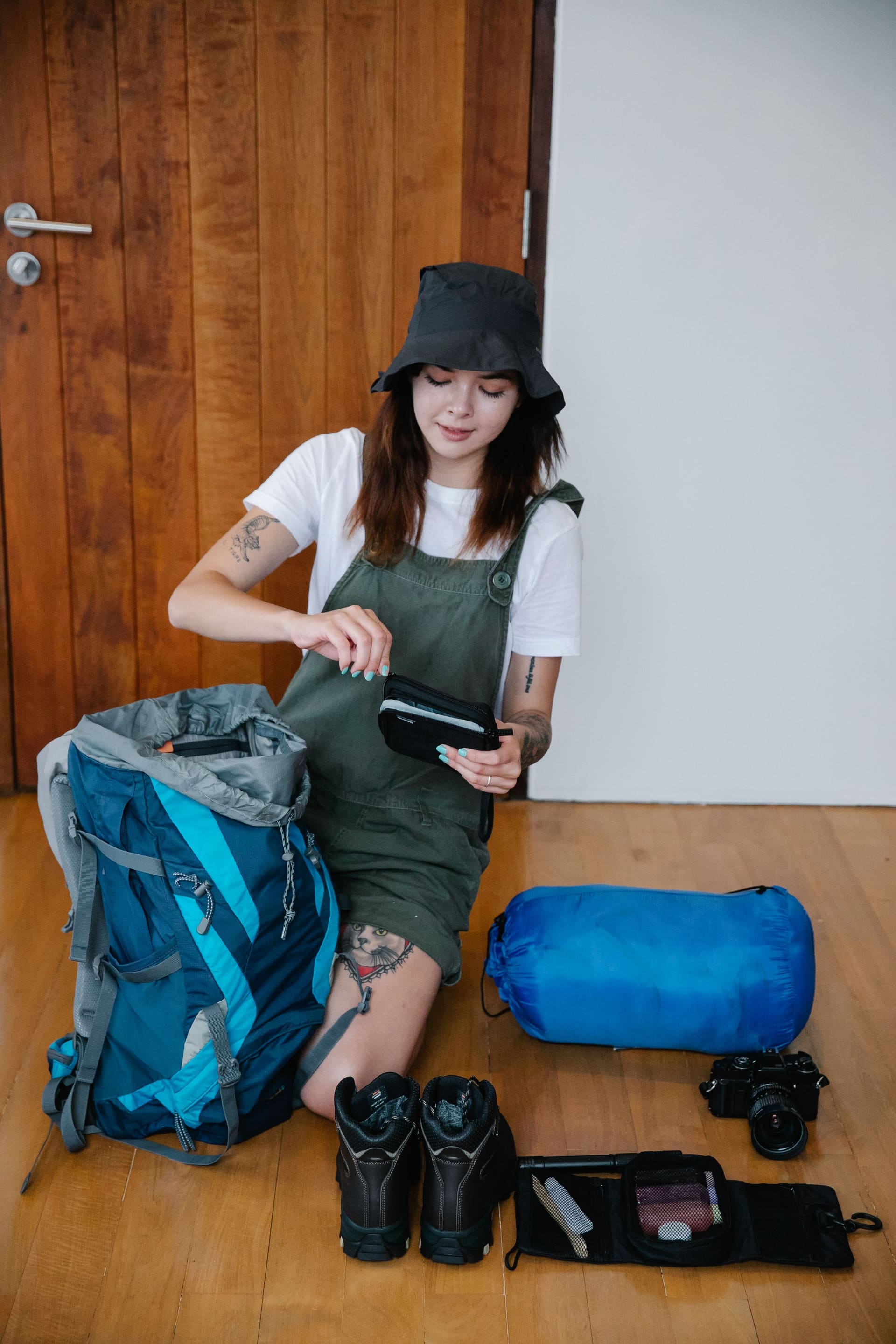
Packing cubes can make a travel backpack much easier to organize, especially when the main compartment has few internal dividers.
Instead of stacking loose clothes on top of each other, you can separate them into smaller sections and remove only the cube you need. Compared with a suitcase, however, backpack space is narrower and the position of heavier items matters more.
01
Choose smaller packing cubes
Small and medium cubes usually work better in backpacks than oversized organizers. One large cube can fill the width of the bag, become difficult to remove and leave awkward gaps around curved sides.
A practical system uses one medium cube for tops, one small cube for underwear and socks, and another small cube for shorts or sleepwear. Add a compression cube only when soft, bulky clothing is taking up too much room.
Lay empty cubes inside the pack before filling them. If you are choosing a set, compare the measured dimensions in our guide to the best packing cubes for carry-on bags, because size names are not standardized.
02
Match the cubes to the backpack
First look at the main compartment and its opening. Rectangular cubes are easy to arrange side by side in clamshell travel backpacks, while smaller cubes can be stacked vertically in narrow top-loading packs.
Do not force a cube into a space that is too tight. Pressure from an overfilled organizer can strain both zippers and create an uncomfortable hard edge against the back panel. Soft-sided cubes leave more freedom to fill irregular gaps.
The pack itself also makes a difference. Our travel backpack guide compares designs intended for organized travel, including bags with wide openings that make individual cubes easier to reach.
03
Keep dense items close to your back
A balanced load is easier to carry. Place denser cubes near the middle of the bag and close to the back panel, then put lighter clothing toward the front or top. This keeps the load from pulling noticeably backward.
Packing cubes full of clothing may not be the heaviest objects in the bag. A laptop, water, shoes or camera equipment can weigh more, so consider the complete load rather than arranging the cubes in isolation. Keep both sides reasonably even.
04
Organize each cube with a clear purpose
Separate clothes by category, activity or part of the trip. Categories such as tops, bottoms and underwear work well for most journeys. For an overnight stop, one small cube containing sleepwear and a clean outfit can be even more convenient.
Labels or different colors help when several cubes look alike. Avoid creating so many categories that you have to open every organizer to remember the system. Our general guide on how to use packing cubes explains rolling, folding and filling each cube evenly.
05
Use compression selectively
Compression cubes reduce the depth of soft clothing, but a tightly compressed cube can become dense and rigid. That shape may be difficult to fit around a curved backpack or uncomfortable when placed directly against your back.
Use moderate compression for T-shirts, underwear, pajamas and lightweight sweaters. Dense jeans and structured jackets compress less. See how compression packing cubes work before tightening the outer zipper, and remember that compression reduces volume rather than weight.
06
Keep frequently used items near the opening
Put a small cube near the top or front opening with clothing you might need during the journey. A spare T-shirt, underwear or warm layer should not require unloading the entire backpack at an airport, station or hostel.
Documents, medicine, electronics and chargers usually belong in dedicated pockets rather than clothing cubes. Liquids should also remain separate and easy to inspect. A suitable carry-on toiletry bag helps contain leaks and keeps clean clothes protected.
07
Leave flexible space for the return trip
Packing every centimeter can make the backpack slow to close and difficult to repack. Leave a little flexible space for a jacket, food, laundry or something acquired during the trip.
Before leaving, put the pack on and walk around at home. If it feels unbalanced, shifts as you move or has a hard cube pressing into the back panel, rearrange it. For suitcase-style techniques that also apply to clamshell bags, see how to pack a carry-on with packing cubes.
Sources and further reading
We use primary and specialist sources to check the principles in this article. Product recommendations are researched separately.