Does your phone struggle to last all day? A 10,000 mAh power bank is a good place to start. It offers useful extra power without too much weight. Choose 20,000 mAh for a long trip or several devices. This power bank capacity guide explains what those numbers mean. You can also see our best power banks under $50.
01
Why advertised mAh is not delivered mAh
A 10,000 mAh bank does not deliver all of that power to the phone. The number describes the cells inside the bank. USB uses a different voltage, and some energy is lost along the way. This is why a simple division often promises too many full charges.
Watt-hours are more honest for comparing energy. Ten thousand milliamp-hours is 10 amp-hours; at 3.7V that is about 37Wh before losses. The real result changes with the electronics, cable, temperature and device, so leave some margin instead of planning around a perfect calculation.
02
Choose capacity for the time away
A 5,000 mAh battery can be enough for an emergency. A 10,000 mAh model works well for daily use. Choose 20,000 mAh when you will be away for several days or need to charge more than one device. Bigger is not always better. A heavy battery left at home cannot help you.
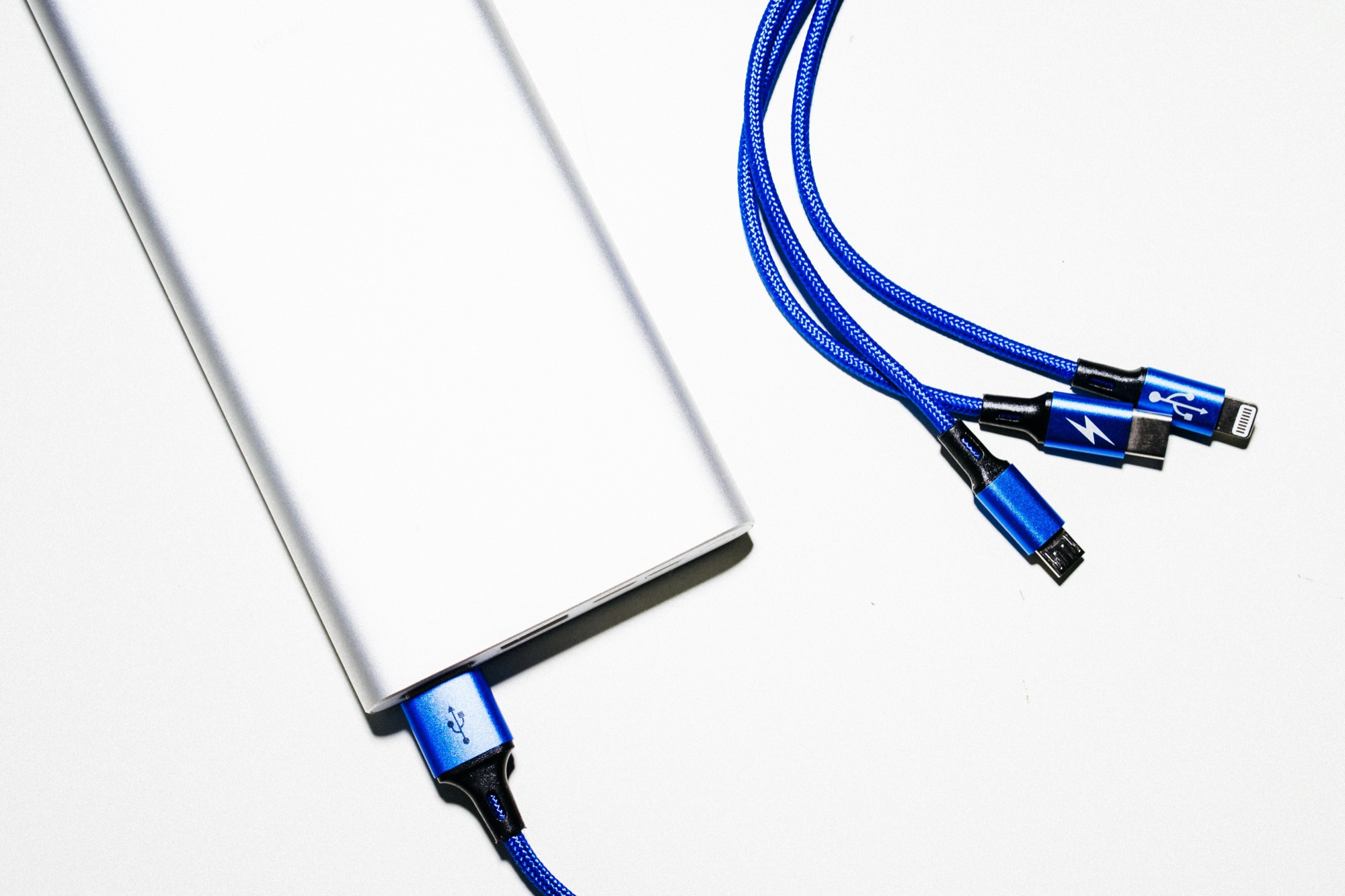
Integrated cables reduce clutter, and a combined wall charger can make a neat travel kit. The trade-off is repairability: when a built-in lead fails, part of the power bank's appeal goes with it.
03
Check output wattage and ports
Capacity tells you how long; wattage tells you how fast. A phone has modest needs, but a working laptop may require 45W, 65W or more. Check that the headline output is available from one port and see how it changes when two devices charge together. A large bank that takes all day to refill can also be surprisingly inconvenient.
If you need household AC sockets rather than USB, you are shopping in a different category. Use our portable power station size calculator instead of buying an enormous USB battery and hoping for the best.
04
Check flight rules and safety
Airlines normally express battery limits in watt-hours and require spare lithium batteries in carry-on baggage. Rules and approval thresholds can change, so check the operating airline before flying. Our carry-on luggage size guide covers the bag itself.
Choose a bank with clearly printed capacity and clear safety information. Stop using it if the case swells, cracks or becomes unusually hot. For overseas charging, remember that a travel adapter does not convert voltage.
Small details make a bank nicer to own: a percentage display, a low-power mode for earbuds and cables that support the promised speed. A USB-C hub or dock may pass charging, but every link in the chain must handle the wattage. Buy enough energy for the day, enough output for the device and no more weight than you are happy to carry.
Sources and further reading
We use primary and specialist sources to check the principles in this article. Product recommendations are researched separately.

